Epilogue

*this is the most recent post that is actually on this blog. The conclusion to my summer travels, and a long-overdue one. Thank you for waiting, and I hope you have enjoyed reading this blog’s travels*

It’s taken a broken adaptor and couple of days for me to separate myself from my laptop screen, but said separation has allowed me to reflect on my time and enjoy the closing days to the maximum. As my grandmother rightly wrote to me, this trip deserves a conclusion and it would be insane to not give myself and whoever is actually reading this closure.

Claude Lévi-Strauss once wrote that “feasts are good for eating, drinking, and thinking“. It is on this thought that I have been dwelling in the last few days as I really felt myself and my ability to converse coming into their own. I’ve often interpreted Lévi-Strauss’ comment to take “thinking” as an overarching observation on the innate social effects that commensal eating and drinking have on human beings. Sharing is caring: whether it be sharing in an experience, or the last beer of an evening. Social bonds manifest themselves stronger when there is something to link the divide between two or more people. The divide in this case, can be a language barrier that frequently has had me at a loss in trying to communicate my desires, likes and plans through the often mysterious structure of Japanese.

My time living in a host family is exactly and more than what I expected, as I have mentioned briefly in previous updates. Japanese hospitality and kindness is unparalleled. My road trip to Shimane Prefecture last week with my host mother, her son and gramps allowed me to fully appreciate this for the first time. The seemingly mundane experiences of visiting a museum together, laughing over a meal that was too hot or reading a (ominous) fortune at the Izumo Taisha Grand Shrine might not be innately exciting, but these small things are what allow for a common ground to be forged between people that can make human interactions so valuable. Naturally, the beauty of what was visited must not be forgotten or underestimated, as all my experiences in Japan have been.

It also happened to finally coincide with the official end of the rainy season, as announced to me triumphantly by heralding in a scorching heat that persisted for the remainder of my time, embellishing the Adachi Museum of Art and the Grand Shrine much to their advantage.

The heat and a sky of perfect blue led me by the hand on Friday morning to the famous island of Miyajima. I was admittedly nervous as I was on my way to spend the weekend with Prof. Kitano and his class from the Hiroshima University of Economics; unsure if I would be an unwelcome presence or stick out like a sore European thumb. I was relieved to leave on Sunday after what could possibly have been one of the most happy and unique memories that I might have in my life so far.

(Kitano is the charmingly witty and ridiculously intelligent man who put me in contact with my host family). I received a VIP tour of the Itsukushima Shrine and the Daishō-in Temple by the vice-chief monk, and wrapped it up with an Okonomiyaki and grilled oyster lunch with Kitano. It was at this point that I met the class – third year media and business students, and for 2 days I felt as though I was one of them. We ate dinner together, drank (lots) together and talked until early. It felt as though Lévi-Strauss himself were perched on my shoulder, contently watching as we shared a communal Sukiyaki and as we slowly became better and better friends. I struggle to remember a different time where I have been more warmly welcomed immediately into a group without question.

To take things to a more poetic standpoint the climb up the albeit small Mt. Misen the next morning was an experience that slowly carved a bond out with every mossy, damp step that brought us closer to our goal. The reward of a view of the Seto inland sea, dotted with islands in the distance looked like a scene that could have been painted by Yokoyama Taikan in the halls of the Adachi Musuem. Islands shrouded by undulating mirages, with white beaches and tree-covered hills in a sea of deep deep blue. It is a view that for me might sum up my entire trip, tangible yet slightly surreal when I look back. An experience that stands as alone as some of the distant islands that I could see shrouded in excitement and mystery.

I’m glad and honoured that I made friends in that short period of time. After sitting in Japanese classes learning the formalities and grammar for 8 years, being able to kick back with a beer and casually joke about them with young people in casual Japanese is a reward unlike no other after so many years of studying and learning.

Hitching a ride back to Hiroshima on Sunday evening as passenger on Reishi’s motorbike was unbearably cool. I now understand why people ride motorbikes. He even invited me to the onsen and a dinner at his dad’s ramen restaurant. Pretty awesome guy.

I was sad to leave my host family and my new friends yesterday morning. However, all good things must come to an end. I wrote this whilst in transit in Hanoi, and the feeling of retracing my steps is nostalgic and is helping me to come to terms with the month that has just elapsed, and the things that I’ve done, seen, eaten, drank, the people I’ve met, the conversations I’ve had. It gives me a taste for more. More things that I can experience, more things that I can crystallise in my mind as invaluable memories. Travelling alone has provided the freedom that I crave to immerse myself into myself and the things that are happening directly around me at every second. I can think of no other time when I have not relished every single second of a day. The blog has more or less kept me in touch with the world, and you will be relieved to know that this is the end of travel blogging. Thank you for reading. Expect more and more varied blogs from here on out.

広島: Bending Adversity (2)

city of 300,000

can we forget that silence?

in that stillness

the powerful appeal

of the white eye sockets of the wives and children who did not return home

that tore apart our hearts

can it be forgotten?!

Tōge Sankichi, 1951

It seems only logical to me that places such as Hiroshima, and Nagasaki, are designed to crush your soul in the face of indescribable cruelty and horror with the intention of getting their message across. I thought I knew this by now, and would be able to handle the Atom Bomb museum in Hiroshima, and yet again I found myself weeping before what I saw and learnt.

Hiroshima carries a far greater symbolic meaning in the Japanese psyche. Being the first location of an atom bomb being dropped on people, and with a far larger death toll (140,000 are thought to have died by the end of 1945), Hiroshima stands proudly today as a symbol of exactly what the Japanese way of life is about. Getting back on ones feet. Forgiving, but never forgetting. Rebuilding and reforming, with a mission and a purpose. The peace memorial with its simple grace represents not only the horrors of war and the sacrifice of thousands, but also as a worldwide flagship for peace and a gathering place for movements for the abolishing of nuclear weaponry. The museum is sobering, naturally, it does not hide the truth and is to the point. There are no frills here. Such a message has no time for frills.

It is also here that I learnt that the dropping of the bomb on the 6th of August 1945 also killed hundreds of non-Japanese; among the dead were also southeast asian exchange students, Korean and Chinese immigrants, and even American prisoners of war. The loss of the innocent in times is a result of the hideous nature of such indiscriminate mass murder. And while every day, innocent children, women and men still die every day in less fortunate places, the lessons still don’t seem to have sunk in. War seemed to be an adequate excuse for accidentally vaporising people who bravely bade their time in prisoner camps, only to die at the hands of the ones they serve alongside their enemies, and it still seems to be adequate today. It was all well and good to sentence Nazis to death in Nuremberg in the 50’s, but what is happily brushed under the carpet and excused by wartime circumstances is the unquestionable crime against humanity that is the birth of nuclear weapons.

The famous atom bomb dome on the banks of the Motoyasu river in Hiroshima should stand forever as a painful reminder of what these weapons of mass destruction do to families, cities and nations until nuclear warfare is outlawed and removed from the surface of this planet. If Prometheus was banished to infinite suffering for stealing the secrets of fire, then perhaps a nuclear holocaust is what humanity deserves for trying to meddle with things that they shouldn’t. 

A frail olive tree stands in the courtyard of the victim’s memorial, breaking its way through concrete towards the clouds with biblical determination.

The city of Hiroshima lives, just like Nagasaki, reborn and proud. Like every other Japanese city, the people of Hiroshima swamp the shopping streets, pile into pachinko parlours and crowd their local Okonomiyaki shops. This city lives for the future. I cheered myself up with a sushi lunch and followed it up by a trip to the Hiroshima Museum of Contemporary Art – hidden on a forestry hill in the east of the city, where signs literally banned some entrances due to very real danger of the local hornet population.

And on the topic of Okonomiyaki, dinner that night at home greeted me with a portable flat iron sitting on the dinner table – Okonomiyaki, homestyle. I’d eaten enough Okomiyaki in my life and watched enough youtube videos to really impress my host family with my pancake flipping skills, but of course i didn’t admit that.

This is a long post. But it’s an important one. It’s also important to never forget who the real war criminals are, and important to remember that those people will never face trial for their crimes against humanity, and the thousands of innocents who have died in Japan at the hands of these monstrosities will never know justice, only pain and sombre remembrance.

広島と姫路: A Tale of Two Cities

Hiroshima, Mon Amour – the feeling of romance and mystery perhaps wasn’t as strong as in Marguerite Duras’ film as a heavy sky heralded in my arrival to this city, although I avoided the summer rains just long enough to take a quick and wholesome look around the city. Also, someone shouted this blog out on the Oxlove Facebook page, so if you’re the kind poster and you’re reading this, this one’s for you.

I’ll preface this with a disclaimer that I am yet to see the more important and meaningful parts of the city. That is to say, the Atom Bomb museum, Peace Park and the famous Atom Bomb Dome still await me. I think Friday is the day for that. Anyways, yesterday, I got out of Hiroshima station and took a leisurely walk towards Shukkeien and the ruins of Hiroshima Castle. It was still dry, so the Shukkeien Garden was a pleasant if not slightly sweaty time. But in the long line of Japanese-style gardens, this one is also just as hard to fault or dislike. 

Hiroshima Castle is described as a ruin on maps and on the internet, although what appeared before me was hardly a ruin. Sure, all the walls weren’t there, and some of the turrets were missing, but it’s easier for me to describe the castle in Kumamoto as a ruin compared to Hiroshima. The entireity of the main keep stood strong, imposing its five stories high above the rest of where the castle used to lie. Naturally it was all destroyed in the blast in 1945, but the reconstruction is so good that one could have thought it had been standing there forever. It’s at this moment that it started raining, and it seemed like a good idea to head back to the station before jumping on a train up to Kabe, where I have been warmly welcomed by the Yoshiokas, my host family until wednesday. My Japanese is really being put to the test now…

We ate, I showered, and went to bed, exhausted from finally being able to set myself down knowing that I didn’t have to move for a while now.

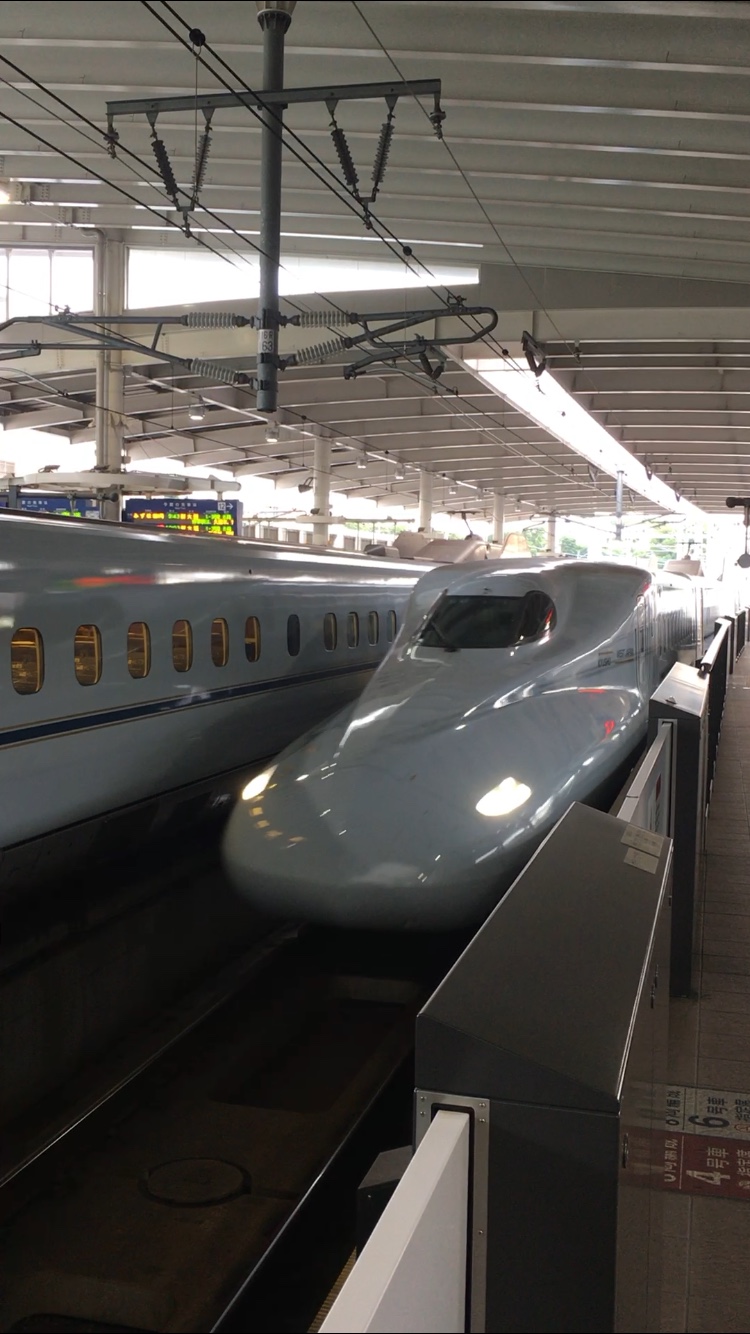
That didn’t last so long however, because at 10 this morning I hopped on a bullet train to Himeji – and and I’d like to sincerely thank whatever powers that be (God, Buddha, Shrek, or some nondescript deity who likes me) for letting the sun poke its shy head through the rainy season’s everlasting fog. I don’t think it would have been appropriate to see Himeji Castle, in six-story brilliant white glory in any other setting than in a blue sky. It doesn’t really need explanation. It’s huge, it’s beautiful, and I couldn’t help grinning like an idiot in awe at what I was witnessing and how lucky I was with the weather. 

The accompanying Kōkoen garden was sublime. Probably the most beautiful I have seen. And I can comfortably say, I’ve been to a fair few. It’s crazy how much just a little bit of sunshine can make even small rocks or mossy lawns glow in an entirely mundane yet sublime beauty, one that Sōetsu Yanagi would have probably been infatuated with. I’m also reading his writing at the moment; The Beauty of Everyday Things. It seems appropriate given that I’m getting a lot of rain and am trying my damndest to appreciate things that I can see even if it pours from above. 

It’s at this moment that it started raining like crazy, the moment I stepped out on to the platform at Himeji to go back to Hiroshima. It seems that I have made the most of my window of opportunity to experience real beauty, and that window seemed to have shut very abruptly and very timely on me. It seems that the one in charge of the weather thought I deserved a bit of relief.

Tomorrow I have no plans really, although I have a couple of ideas: Either I go to Osaka, or I want to return to Nagasaki to see the things I missed. I’m currently leaning more towards Nagasaki though, I felt like that city really clicked with me, and besides, it doesn’t feel right to give such a large city as Osaka only one day. Maybe that will be for the next time I come to Japan. In any case, who knows what tomorrow will bring ? The least I hope for is dry weather. 

鹿児島: Tears in Rain

Being caught in the tail end of a subtropical typhoon wasn’t previously on my bucket list, but I guess that it is now is considering that I have now checked it off. I previously might have mentioned, back in Fukuoka or Kumamoto, that I’d never seen so much rain as I did – my saturday in Kagoshima steals top place on my “rain list” with ease. It felt like it was raining upwards, in the humble words of Forrest Gump. It was that kind of rain where it is more worth getting a taxi to walk a 10 minute walk between station and hotel.

Speaking of hotels, saturday was a bit of a disaster (momentarily). I had left Kumamoto having made a reservation in a little place called Ibusuki, south of Kagoshima city, maybe what I thought was half an hour by train. I swapped out the flashy bullet train for the local, rickety yet endearing local train, but found an entire hour’s journey south on an extremely bumpy ride that I genuinely thought would make me see my breakfast again. 

Ibusuki was, and is, no doubt a charming seaside resort. The nearby Ikeda Lake and the hot sand onsens on the beach are a source of local pride, but with a ominous looking horizon and the realisation that the beach resort was miserably empty, run down, and my hostel so unbearably sad that I didn’t have the heart to commit to it. I cancelled my reservation (for free, luckily) and scooted back on the long ride back to Kagoshima city – where the storm hit, and everything turned a sad shade of dark, dark grey. 

I was now in Kagoshima station with a deflated morale and no place to stay, so I desperately checked into the cheapest hotel I could find. I spent the rest of the day shut in, and my evening actually allowed me outside into what I quickly realised was the throbbing and packed red light district on a saturday night. I had a great meal, bought some beers in the convenience store and watched Blade Runner (2049) until I couldn’t keep my eyes open. Also, I ate horse sashimi. Maybe I’ll get some hate for this, but to me this isn’t a big deal. The horse that suffered momentarily for a part of my dinner last night probably lived a life that was far longer and a hundred times more pleasant than any other livestock animal that is more regularly consumed in our countries. Also, it was delicious, so maybe I’ll be eating Findus lasagnas again soon.

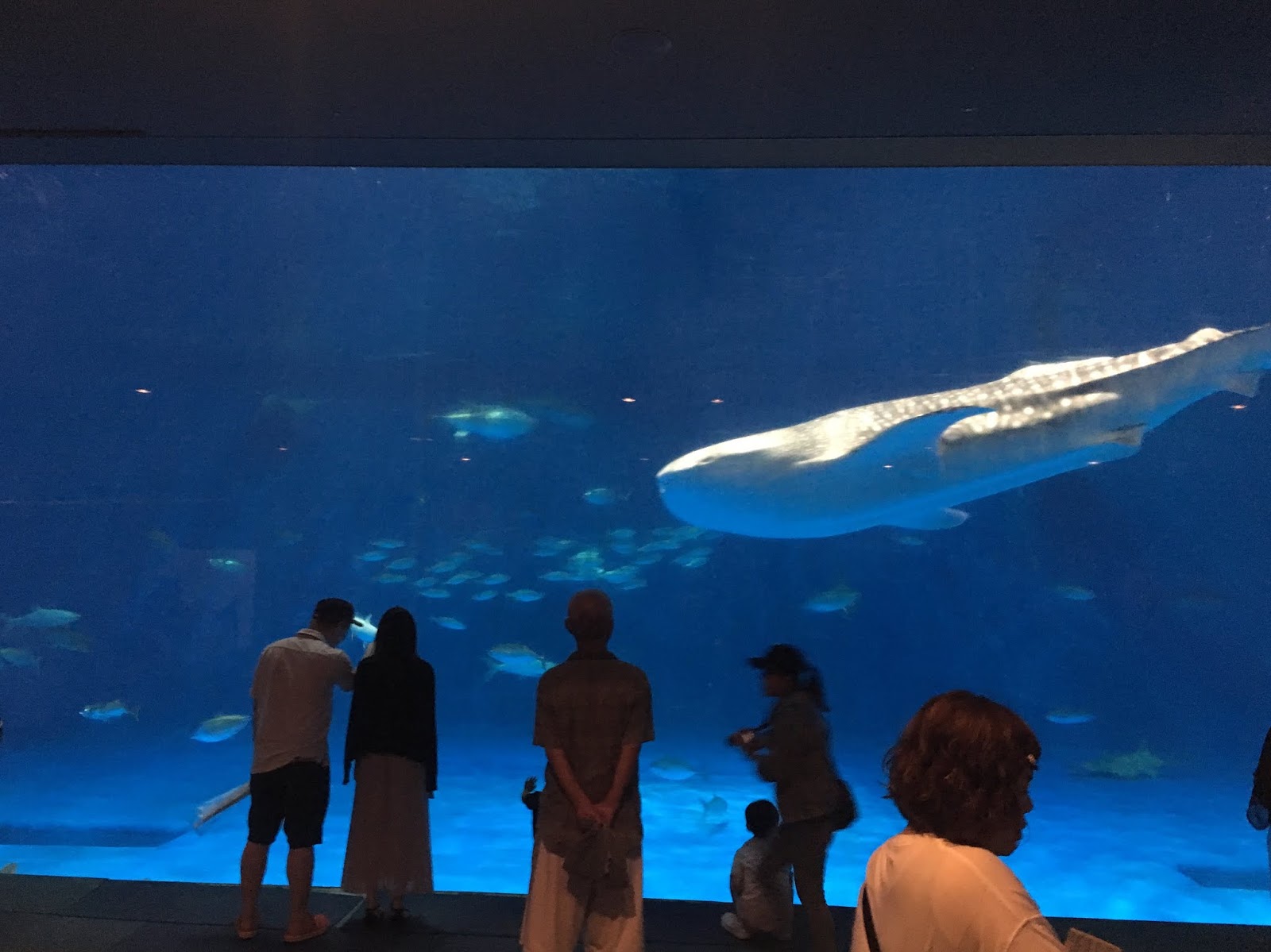
I awoke to a dry morning. Humid and still recovering from being battered by a storm the night before, I found the courage and the motivation to get out into town. I started by going to the aquarium in the harbour. It was fantastic. Aquariums are always special places, but coming off my thoughts on animal cruelty and treatment of animals, the presence of a whale shark in the largest tank, along with some rather sad dolphins that I saw in their tiny “pen” on the way in is an issue that I don’t think escapes criticism.

Small fish, I can understand, because you can give them larger tanks for their size (relatively speaking), but a whale shark doesn’t belong in a tank swimming around endlessly in circles for children to bang the glass and for obnoxious parents to snap flash photos when the signs clearly say to not to. I’m pretty certain that I saw many fish and sea life in the aquarium that seemed blind in one if not two eyes. Bittersweet, and definitely not worth £12, but the magical quality of aquariums is still undeniably alluring.

An aquarium seemed appropriate for the kind of weather that was ongoing. If you’re never sure when it might start pouring again, being inside is best. However, it was looking pretty dry so I decided to hop on the ferry to Kagoshima bay’s crown jewel, Sakurajima – Japan’s most active volcano, and said to be an impressive sight. And it is, even when the peak is shrouded in clouds and smoke. I even got a small ray of sunshine on the island which brought a grateful smile to my tired and slightly hungover face. I walked through the lava formations through the forest, and decided it was time to head back just as it began to drizzle again. 

It has been exhausting in these last few days. I never knew that weather could affect me on such a deep level, and yet it has tainted these last few days. But the benefit of this is that I know I’ll come back, if only just to snap the right pictures at the right times so I can crystallise these memories in a better place. I am excited to meet my host family tomorrow, but more so looking forward to have a place to put my bags down finally as I prepare for the last leg of this journey. 

Huis Ten Bosch and Ōmura Bay: The weird and the wonderful

It goes without saying that a name like Huis Ten Bosch doesn’t exactly scream Japanese. Although, given the Dutch’s historic presence in Nagasaki Prefecture, especially on their trading post of Dejima in Nagasaki, it seems to fit in bizarrely well on the shores of Ōmura Bay. A life-scale recreation of the Netherlands, the streets are lined with Amsterdam-esque buildings and churches and canals. It’s an oddity in any case.

This wasn’t really why I came here though, it’s easy enough for to see the real thing for itself, and a £50 entry ticket to a mock Dutch city theme park didn’t sound too appealing. My real quest was to go to the beach, to quote Mr Bean. And what better place to do it than here, in Ōmura Bay where the inland sea dotted with islands would give Thai resorts a run for their scenic money.

In Beppu, and in Nagasaki, and even in Fukuoka, I was disappointed to find that going to the beach doesn’t really seem like much of a thing here. All these locations are seaside, yet as I mentioned yesterday, the sea fronts are laden with concrete walls and car parks. I was greeted at Huis Ten Bosch station by the charming Michi, whose house I am staying in tonight. I have an adorable little Japanese-style room to myself. His house is a little outside of HTB, but he drove me and my rucksack to a small peninsula in the bay where there was a bathhouse, and lo and behold, a beach. An actual sand beach. Sure, it was enclosed, with safety buoys and an ugly sea wall, but there was sand and there was seawater. Don’t get me wrong, I like pools and hot springs, but at heart I’m an ocean kind of guy.

After a brief conversation with the workers, they let me come down onto the beach which they were “preparing” (???) in order so that I could have a swim. I was then left by Michi to my own devices. To clarify, to me beaches in Japan seem to be public but also not public ? They open only after the rainy season (which happens to end next week) only for summer. It’s a bit bizarre, and kind of defeats the purpose for me but it didn’t matter because the smell of salt water on my skin and in my hair was so refreshing and rewarding that all these questions floated away on the gentle swell. It’s not every day you get a beach to yourself.

The beach being officially “closed”, there was no shower. So, I trekked up the hill to the bathhouse to basically spend the rest of the evening soaking and eating and admiring the view of the bay from the outside bath. I had a pretty good late lunch too. With vending machines and even gambling machines, you could literally spend your entire day in the bathhouse and never have to leave.

I was relaxed, drowsy, sated and clean, and I walked back towards the local station that was between the bathhouse/beach and HTB. A walk along the sea where the sun set behind soft clouds and a misty horizon as the day’s heat started to dissipate. The evenings in this kind of weather are surreal and slightly magical with their hazy light.

I met up with Michi again after having grabbed a snack at the HTB Family Mart, in a weird spot outside the theme park where music was blaring for apparently only me, under the massive hotel that looked like it had been ripped straight out of Copenhagen. Weird, to say the least. I am going to relish this night’s sleep in my own room before I head out to Kumamoto tomorrow morning.

Goodnight.

別府: Steam City

My apologies for not posting a blog last night, I needed a bit of rest. It’s been moving extremely fast since the start, and coming to the hot spring town of Beppu seemed an appropriate place to let off some steam (pun intended).


Beppu lies on the northeastern coast of Kyūshu, in a shielded bay. I got here relatively late in the day yesterday from Nagasaki, but Beppu being a spa destination for Japanese tourists, I was in no mood to rush. Beppu’s springs are historically known for their mineral-rich waters, and the sick and ailing from all over Japan were known to come to this location to benefit from the healing properties of the water. It seems like this heritage lives on, as I spied a great many wheelchairs, zimmer frames and walking sticks on my way out of the station, all with the same hopeful gleam in their eyes. 

Baggages dropped, I decided to go to the Kannawa Onsen (the centre of Beppu’s onsen activity and the most widely-known). It was a pretty long bus ride away, and I was surprised to find the streets completely empty. I wanted to visit the Jigoku Onsen, the “Five Hells”; water pools where boiling hot mineral water bubbles to the surface in a furious boil. I was annoyed, and disappointed, to find them closed… However, I did benefit from a free “foot onsen” that is common around this area. Steam literally pours from the ground here, and the bathhouses on every street corner are not shy to advertise that their baths are the best in all the onsen.

I returned back towards where my hostel was. The Takegawara bathhouse might not be the most luxurious bathhouse in town, but it is certainly one of those with the most charm, and also the most highly recommended in Beppu. Although before, I wanted to catch the sunset on the seaside – and I did. It was beautiful, and the bay was as slick as oil, but the stern seafront with its seawalls and lack of beaches was slightly disheartening. It strikes me now that the reasons for this are the constant threat of tsunamis from the deep sea, hence Beppu’s concrete seafront.

Back to Takegawara, I’d forgotten just how hot onsen are. Scorchingly hot, and a completely different sensation to anything else, being almost completely submerged. I was used to saunas, and in my mind these were not so different – I lasted 10 minutes at most, and was in the water at 3 separate intervals broken up by splashings of cold water and a spinning head. However, it seemed that this was the trend for all the local visitors too: arrive, wash, get in the water, get out, rinse, leave. I admit the bone-deep feeling of relaxation post-onsen is unparalleled… And for a mere 100 Yen, who can say no ?

My body as limp as a drunkard’s, I found myself eating dinner first in a small Izakaya (like a pub) followed by a sushi bar, where I was bought drinks and some sushi by some nice guys at the bar… my sleep was indescribable.

My plan the next say was to rent a bike at Beppu’s Giant store, get on a local train and cycle the Kunisaki peninsula and discover the temples and shrines lost in the deep volcanic forests. I found the store to be closed only on Tuesdays, and I was very irritated. A sad McDonald’s later (comfort food), I plucked up the courage to get on a different train to Usuki, the site of the Usuki Sekibutsu – stone-carved Buddhas. I picked up a bike for free at the station, so in sum, my day wasn’t that much of a failure after all.

A sweaty bike ride through the old samurai town of Usuki later, a small museum and hillside greets me. The restored, and preserved, Buddhas sit proudly and mysteriously overlooking the countryside. Said to have been carved in the late Heian Period (794-1185), these stone Buddhas are the only ones in Japan to be bestowed the title of National Treasure. It was moving, and I would have stayed provided that I wasn’t dying for a shower and a glass of water.

My bike and I floated back towards Usuki on the breeze in the late afternoon glow. Back in Beppu, a different bathhouse awaited me, of which’s temperature was considerably more manageable. My supermarket dinner was sat happily in the fridge, and I sit here now, belly full, and the satisfaction of knowing not to have entirely wasted these two days.

A city where steam billows from the streets and hot water seeps from cracks in the rocks; one where people know the meaning of calm. A sleepy, seaside city that in my mind only has the place of rest and recuperation – Beppu, until next time.

Expect blogs every day from now. 

大濠公園

Another incredible day has passed, and yet I have only been in Asia for a week, let alone in Japan for 2 days. It feels like I’ve been here forever but I have seen so little. A relatively quiet day to say the least, I spent it walking around the port and fish market areas, and ending it in one of my new favourite parks in the world; Ōhori Park. And I also wasted about 1,500 Yen on a new battery and film for my camera to see if it might fix the problem. It didn’t. My irritation is indescribable and my wallet hates me. 

As I mentioned, I sweatily furrowed around the local Bic Camera superstore in Tenjin in search of a 3V battery, which is notoriously hard to find. I exit the store, relieved, thinking my issues to be over only to find that the insufferable beeping of my camera is still there and the lens refuses to come out of the body. New film changed nothing either.  

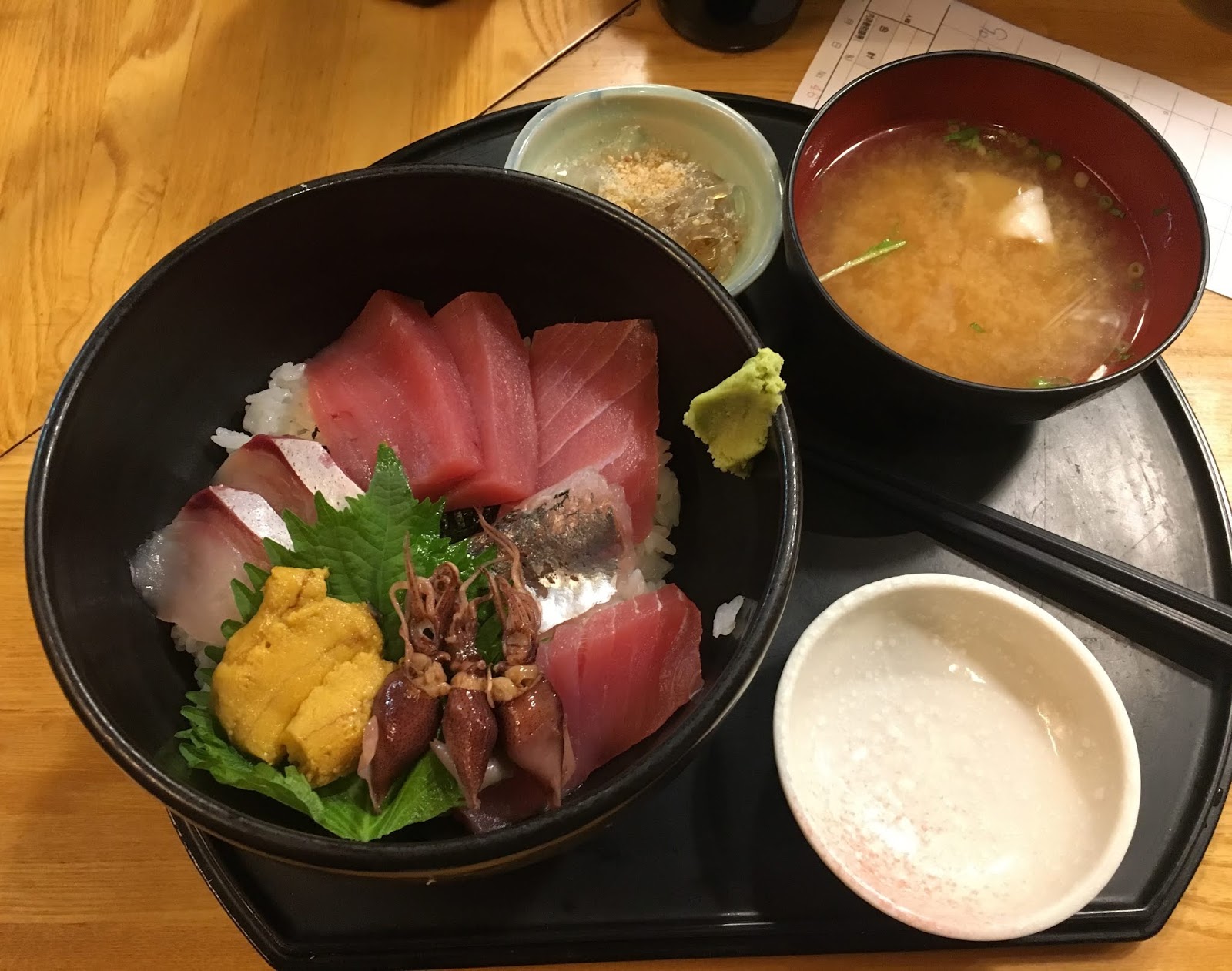
Sadness aside, My mission was to get to the fish market. I had read that you aren’t exactly allowed inside the actual market apart from on only 1 day of each month, but obviously I hadn’t checked so I just went anyway. Naturally, I got lost. Or to be more specific, I was too intimated by the security guards at the entry to the market so I just carried on nonchalantly. As if a tall white European boy could ever look inconspicuous whilst randomly strolling through Nagahama… This actually took me on a nice detour to the port, where I attracted several strange looks from a woman walking out of her house and an old man on a bike who cycled past me. The Seven-Eleven’s wifi allowed me to then rack up the courage to walk back to the market with actual directions, where I found the restaurant I was looking for, and what followed was perhaps the best kaisendon I’d ever have in my life. 

For a mere 1,080 yen (£7.56). I’d not had sea urchin in many, many years, and it is just one of the most incredible flavours on this good earth. Not to mention the generous assortment of tuna, yellowtail amberjack and baby squid. 10/10. Market food is the greatest, freshest, cheapest way to experience proper Japanese seafood.

After picking up a bag of chips and an ice-cold Asahi, I made my way down to what is undoubtedly the most magnificent spot in all Fukuoka; Ōhori Park and the Fukuoka castle ruins. Also preceded by a tiny little Japanese garden sandwiched between the ruins and Ōhori Park. I have never seen so many dragonflies in one place at one time. 

Ōhori Park is a large lake. It has a couple of islands that stretch across the middle of it, joined together by bridges, so the very middle of the lake makes for a very relaxing afternoon spot to sit in the shade surrounded by turtles, ducks, and a healthy serving of middle-aged joggers. It makes sense that this is one of the most photogenic places in this city. Crystal-clear blue waters under a blue sky on a hot July day is a recipe for any perfect picture, but on top of that a perfect place to lie down and catch a quiet breath from the ever-moving Japanese city life. 

Tonight, I think I shall go out. I want to go out in town at night, and see what it’s like to live this city after hours. I might even swing by the park again later – it’s not like I’m about to catch a cold by being outside anyways.
Good Morning Vietnam

It’s fair to say that waking up in a country completely changes your impression of it. Although I had been out until 1:30 in the local bars and set an alarm for 9:30, I still woke up at 7:30? Something about it bothered me (understandably). Perhaps that it was that I had failed to combat jetlag, or perhaps it was the unfamiliar feeling of a natural wake up after an actually decent night’s sleep… something that isn’t exactly common for those who know me. But what this did bring to me was the sensation of rising and waking up at the same time as my gracious host, Hanoi. It set the pace for my last day, a pace that put me in tune with this vibrant city and this is exactly what I want to nail every time I go to new places – harmony.

I should mention that I was accompanied today by George and Laura (shoutout you guys rule) who called me over to join them while seeing me eat spring rolls and drink beer alone in the bar. Legends.

I’ve never really been one for sweet breakfast, so breakfast consisted of more freshly fried spring rolls, poached eggs and fresh fruit. I don’t think I could have wished for a better start to the day. Except maybe a better internet connection. The plan for the day was to 1) visit the Mausoleum of Ho Chi Minh 2) visit the Temple of Literacy and 3) eat an actual Vietnamese Pho. This seemed simple given that all three of these things are available within a 2.5km radius. But, there is a large soggy catch. You have to also factor in the walking part. The walking part, which feels more like a swim given that every step is equivalent to losing 5 gulps of bottled water. You haven’t actually sweat properly until you can literally feel the sweat passing through your pores in a 33°C humid nightmare.

The Mausoleum of Ho Chi Minh is massive. The building in itself might not be all that massive, but only when you take into account the size of the accompanying parade square, the residence museum behind, and the sheer amount of security at least two blocks in every direction can you understand the profound importance of Ho Chi Minh and what he represents for Vietnam. The Communists love monumentality in the commemoration of their leaders, and it is not by coincidence that the feeling of walking around this place reminded me of being inside the Kremlin. Minus the buckets of sweat. The museum behind it and the small cool rooms of Ho Chi Minh’s residence embellish Ho Chi Minh’s semi-mythical position as a man of the people, in the true Communist meaning of it.

The Temple of Literature is a marvel. If one could describe the Mausoleum as Holy for the Vietnamese, for me this 11th-century Confucian temple is just as holy. Beautifully designed, long straight paths, symmetrical perfectly-kept gardens and soft, muted serene wooden halls that put even the most humble of Japanese temples to shame. The Chinese influence is glaringly obvious. But perhaps this is what makes it beautiful, another piece to the puzzle that is Vietnamese heritage. A place to worship success in studying, it felt particularly gratifying and appropriate to present my student card for a discounted entry. Hoan Kiem lake and this are probably two places I have discovered that will be extremely difficult to not daydream about once I get home.

The day has been long. It has been sweaty. It has been tiring. There was no more fitting way to conclude my time in Hanoi by the epic “train track street” sandwiched between Kham Tien and Le Duan. It’s rare to have bars and restaurants spilling onto actual functional train tracks, as I found out when the train passed less than a metre away from my face. I also almost forgot to mention that I did get a Pho in the end – and yes, it was as good as people say. It was bittersweet climbing into the taxi to the airport, where I am writing this, as I felt that I had had a full taste of what this place could offer me. To bring it back to harmony, it didn’t feel right to leave just as the city began to come alive for the night. A shame for sure, but I won’t let it leave a bad taste in my mouth. And honestly, the Banh Mi I just ate was pretty decent, so Hanoi and I are parting ways on good terms.

There aren’t many other cities where I have experienced so much new in a mere 2 days. Where else would I have showered in a hotel lobby, seen a rat the size of a small dog, been offered more cocaine and more prostitutes than in my entire life whilst also paying my respects to one of the most peaceful men of the 20th century? Hanoi. It’s hard not to love this place. I will be back, and with a vengeance and a thirst for more of the craziness.

Tomorrow I will be in Fukuoka, Japan. I am anxious and excited to rediscover this country, this time on my own so Hiromu Onogi if you’re reading this, I hope you’re proud of me.

A Night in Hanoi

Vietnam. The ubiquitous destination to “find yourself” while you get your A-levels or IB remarked for a deferred entry to university. Top Gear did it first, and by the looks of it, they won’t be the last by a long shot. Cynicism aside, Vietnam has always been alluring to me and I can understand how alluring it is to thousands of tourists every year. I can also confirm in multiple cases that motorbiking across Vietnam on a gAp YaH is and can be a life changing experience that I do not overlook.

Related image

Vietnam in my mind wore a shroud of mystery. Francis Ford Coppolla’s Apocalypse Now evokeda feeling of intangible curiosity and mystery about this country that would have made Joseph Conrad froth at the mouth. Naturally, this film touches on a slightly more uncomfortable part of Vietnamese cultural identity, and is most likely unfair to use this as a proxy as to how I felt about the country. Nevertheless, the overhanging enchanting mystery of Vietnam has drawn me like a moth to fire, and quite unintentionally at that.

I am sat in my hotel room in the Hoan Kiem district in Hanoi. The air conditioning takes my mind off the sweltering heat outside, and the ruckus of scooters, taxis and vendors on Bat Dan street 5 floors below is soothingly familiar. Hoan Kiem is one of the most remarkable places I have ever seen. The only place I can remember in my memory that comes close is the Jemaa el-Fnaa souk in Marrakech. Old districts of old cities are understandably and frequently crowded, close, and (now) busy – the one thing that I finds unites these kinds of places is that they feel more like organisms than streets and shops. The streets of Hoan Kiem are literally alive.

Food stalls spill onto pavements catering to army officials, grandmothers, men in suits, whilst families of 5 zoom by on their scooter with the daily shopping hanging precariously off the sides. Tourists (myself amongst them) are all too familiar with the traffic situation in Hanoi: red lights and green lights feel like a pure courtesy rather than law. Terror grabbed me when I got off the bus from the airport, but it turns out that navigating the heaving anarchy of Hoan Kiem’s daily traffic is simple. Like schools of fish, the oncoming traffic swarms through you. The incessant honking and shouting of the driivers is the unsaid language that allows for such chaos to function in such a crowded space.

The thing I love the most about discovering new places are the smells. I think I have a particularly strong penchant for associating memory with smell – the smell of my first time in Japan will be engrained in my mind forever, as will the smell of this city (this is the hard part). Let it first be said that Hanoi is hot in July. Hoan Kiem especially oozes with the sharp scents of lemongrass and gasoline, coupled with intoxicating odours of fried meat and the sickly sweet smell of what I can only assume is either durian or festering waste. Hanoi smells heavy. It smells close. Not many people would describe this city like this, but to me this is so intricately part of the animate quality of the city that I feel that it alone can characterise what it feels like to walk down these old streets.

Having arrived in Vietnam at 4:30 this morning, awake since 7:00 the day before and with a check in at 12:00pm, I’ve spent the majority of the morning walking these streets getting my bearings. Bahn Mi, Bun Cha have been the highlights of today’s culinary side. I did not however locate the shop called Bun Cha Obama, blessed by the presence of the former president and endorsed by him… I have however, found my quiet place in Hanoi today. It is hard to describe the calm I felt sitting at the edge of Hoan Kiem lake with a book for 3 hours. Sure, I was asked for 3 interviews with high school kids doing an English project and took 5 photos with 5 different groups of Chinese tourists in the space of an hour. But I didn’t mind. Exiting the Hoan Kiem labyrinth to relax and read by the side of a lake in the shade is an experience that maybe, just maybe, I could put on par with the gappies who found themselves too in Vietnam.

Brexit: Clash of Cultures

“Should I stay or should I go?” Mick Jones posed the unanswerable question back in 1981, and 37 years ago we still don’t know the answer. Going still might mean double the trouble – but these troubles wander slightly further away from the punk rock problem of an indecisive romantic interest. It’s a question that plagues me and many more of my compatriots who have adopted England’s green and pleasant land as our own, perhaps not draped in an 80’s leather jacket but more in the guise of a growing gulf between the United Kingdom and Europe.

Easy to figure out by now that I’m talking about the elephant of all elephants in the room, Le Brexit, in all its glorious disgrace. My proud status of Franco-Swede now only serves to torment and question my identity as my adoptive homeland grapples with its own. Who am I ??? Qui suis-je ??? Vem är jag ??? Ironically enough, as much as I’ve come to distance myself with being British or being called “English”, I’m considered exactly that in both my home countries. People in my situation now sit in a bizarre uncanny-valley-esque state of ethnic identity – not really one, nor the other.

Brexit represents an affront on the freedom of Europeans. It’s that significant. It defines my future, ostracises my family’s heritage and nullifies theirs and my contributions to a country that we call home.

Image result for ljunghusen

I don’t have a British passport. I proudly hold my Swedish and French passports as tokens of my belonging to a modern society. Global, international, multilingual. Leave supporters “want their country back” – from who ?? Nationalism, or at the very least, a strange kind of misguided patriotism that bridges xenophobia and ignorance with racist populism, is a strange thing. The idea of being “British”, according to Benedict Anderson, doesn’t really exist – it’s socially constructed. The idea that the Brexiteers have that Britain must be returned to the British is laughable because there is no such thing as vital, ethnically distinct “Britishness”, just as much as there is no “Frenchness” or “Swedishness”. The cultural identity of this country is diverse and multifaceted, and that is what it means to be British. The ignorance of the average Brexiteer seeks to destroy the very essence of being British, ironically.

As time goes on and as our societies reach further out into the global scene, more and more people will be able to claim more than one nationality – a mixed heritage is becoming the norm. It doesn’t really make sense to close borders and close off oneself to the world that is moving in that direction.

Having a mixed heritage was confusing as a child, being educated in England but spoken to in a mix of Swedish and French at home marked my childhood with a longing, a desire to be just like the other kids at school. Something always felt off. Maybe it was the way my lunchbox had “weird” snacks like brown bread and French biscuits rather than Cheesestrings and Walkers’ Salt and Vinegar. I figured out long after that the difference was that I simply just wasn’t a real English boy. Yet, I wanted to be that English boy. As a child it was all I desired, just to feel slightly less alien in my year 4 class. And in the mind of an 8 year old, the seminal question of who I was began to fester. 

Image result for whitgift school

People often consider me English. Secondary School reeled me in closer to the 8-year old’s ideal of fitting in – the English boy. I could pass for a Brit anywhere for sure. Brexit took that distorted, lonely, badly-adjusted desire and threw it to the bottom of the garbage. Never did I think that my friends and I would go to school and have teachers apologise to us for the thousands of young people who couldn’t vote for their opinions. The idea of being English, or British, disgusts me in the wake of the 23rd of June 2016. The government who said they would stand and fight for us either ran for the hills, turned on us or eventually disappointed us. As close as I could be to British, my state of mind had never been further from it.

Brexit is an embarrassment for the British government. It’s an embarrassment for the British people. The ineptitude of the negotiations reflect poorly on a country that supposedly thinks it is stronger and more independent without the EU. The bickering within the cabinet is comparable to hyenas scrabbling over a carcass. It’s no surprise that the Emmanuel Macron called the Brexiteers “liars” – Brexit means Brexit after all, but the UK government is under the illusion that it will retain all EU privileges and leave all costs and responsibilities behind. And the people who voted for it are suffering too. It’s a costly affair that is neglecting the issues at home such as housing, education, welfare, taxation and immigration in favour of worrying over a decision hailed as England’s redemption that 3 years on has cost the UK 66 billion pounds. This fact doesn’t really need to be elaborated on.

Image result for theresa may and jean claude juncker

The departure of Theresa May this month is without a doubt the most hilarious and shameful move in British politics to date. The consequences of her blatant power grab that magically changed her view on the UK’s relationship with the EU could not be any more fitting. Modern politics is the separation of a quest for individual power and status from a noble position of authority where one cares for one’s people and one’s country. Driving bitter but necessary negotiations into the ground only to leave it in the hands of even more incompetent people like Boris Johnson or Nigel Farage or others cannot be forgiven by shedding a tear as one resigns.

I once thought that I would have to give up one of my passports in order to claim British citizenship. Luckily, I don’t, and I say luckily because I know that many others will have to. Even with this privilege, I won’t apply for the British passport. Call me ungrateful, but no one is more ungrateful than the British public and government who has so little regard to immigrants who have worked, paid taxes and studied to help this country not fall into ruin. Why should people reject their heritage and their roots just to stay in a country that they’ve given everything to? In the wake of Brexit and June 23rd 2016 it feels more and more like defeat to attempt to claim British citizenship. To lie about my identity, and to take on a label of British in order to just resume my daily life – I’d be living an unforgivable lie to myself and to my heritage of which I am so proud and hold so dear to. It’s a dilemma to which the answer still is just as unclear to me as the Brexit deal itself.

So where does this leave me? And people like you, the reader, who perhaps also hails from a European background, not to mention those who have come from much further? Well, it leaves us behind. Neglected, confused, stuck in our uncanny valley. To bite the bullet and take the high road, abandon everything we’ve worked for, fought for, built and curated in England’s green and pleasant land might not make William Blake turn in his grave but it certainly makes me and many others turn in our sleep every night. Protest. Demand for public opinion. Shout as loud as we can. Boycott Brexit-supporting companies (yes, even spoons). Living in permanent anxiety of whether or not I can stay in my home country doesn’t suit me. The idea of “moving back to ___” doesn’t really make sense – I’ve always lived in London. London is my home. There is perhaps still a place for my parents to go back to, but not for me. And as The Clash plays on in the background in my room, I still don’t know if I should stay or if I should go. 

https://www.independent.co.uk/news/business/news/brexit-cost-how-much-uk-economy-money-spent-a8854726.html

Anderson, Benedict R. O’G. (1991). Imagined communities: reflections on the origin and spread of nationalism. (Revised and extended. ed.). London: Verso.