Epilogue

*this is the most recent post that is actually on this blog. The conclusion to my summer travels, and a long-overdue one. Thank you for waiting, and I hope you have enjoyed reading this blog’s travels*

It’s taken a broken adaptor and couple of days for me to separate myself from my laptop screen, but said separation has allowed me to reflect on my time and enjoy the closing days to the maximum. As my grandmother rightly wrote to me, this trip deserves a conclusion and it would be insane to not give myself and whoever is actually reading this closure.

Claude Lévi-Strauss once wrote that “feasts are good for eating, drinking, and thinking“. It is on this thought that I have been dwelling in the last few days as I really felt myself and my ability to converse coming into their own. I’ve often interpreted Lévi-Strauss’ comment to take “thinking” as an overarching observation on the innate social effects that commensal eating and drinking have on human beings. Sharing is caring: whether it be sharing in an experience, or the last beer of an evening. Social bonds manifest themselves stronger when there is something to link the divide between two or more people. The divide in this case, can be a language barrier that frequently has had me at a loss in trying to communicate my desires, likes and plans through the often mysterious structure of Japanese.

My time living in a host family is exactly and more than what I expected, as I have mentioned briefly in previous updates. Japanese hospitality and kindness is unparalleled. My road trip to Shimane Prefecture last week with my host mother, her son and gramps allowed me to fully appreciate this for the first time. The seemingly mundane experiences of visiting a museum together, laughing over a meal that was too hot or reading a (ominous) fortune at the Izumo Taisha Grand Shrine might not be innately exciting, but these small things are what allow for a common ground to be forged between people that can make human interactions so valuable. Naturally, the beauty of what was visited must not be forgotten or underestimated, as all my experiences in Japan have been.

It also happened to finally coincide with the official end of the rainy season, as announced to me triumphantly by heralding in a scorching heat that persisted for the remainder of my time, embellishing the Adachi Museum of Art and the Grand Shrine much to their advantage.

The heat and a sky of perfect blue led me by the hand on Friday morning to the famous island of Miyajima. I was admittedly nervous as I was on my way to spend the weekend with Prof. Kitano and his class from the Hiroshima University of Economics; unsure if I would be an unwelcome presence or stick out like a sore European thumb. I was relieved to leave on Sunday after what could possibly have been one of the most happy and unique memories that I might have in my life so far.

(Kitano is the charmingly witty and ridiculously intelligent man who put me in contact with my host family). I received a VIP tour of the Itsukushima Shrine and the Daishō-in Temple by the vice-chief monk, and wrapped it up with an Okonomiyaki and grilled oyster lunch with Kitano. It was at this point that I met the class – third year media and business students, and for 2 days I felt as though I was one of them. We ate dinner together, drank (lots) together and talked until early. It felt as though Lévi-Strauss himself were perched on my shoulder, contently watching as we shared a communal Sukiyaki and as we slowly became better and better friends. I struggle to remember a different time where I have been more warmly welcomed immediately into a group without question.

To take things to a more poetic standpoint the climb up the albeit small Mt. Misen the next morning was an experience that slowly carved a bond out with every mossy, damp step that brought us closer to our goal. The reward of a view of the Seto inland sea, dotted with islands in the distance looked like a scene that could have been painted by Yokoyama Taikan in the halls of the Adachi Musuem. Islands shrouded by undulating mirages, with white beaches and tree-covered hills in a sea of deep deep blue. It is a view that for me might sum up my entire trip, tangible yet slightly surreal when I look back. An experience that stands as alone as some of the distant islands that I could see shrouded in excitement and mystery.

I’m glad and honoured that I made friends in that short period of time. After sitting in Japanese classes learning the formalities and grammar for 8 years, being able to kick back with a beer and casually joke about them with young people in casual Japanese is a reward unlike no other after so many years of studying and learning.

Hitching a ride back to Hiroshima on Sunday evening as passenger on Reishi’s motorbike was unbearably cool. I now understand why people ride motorbikes. He even invited me to the onsen and a dinner at his dad’s ramen restaurant. Pretty awesome guy.

I was sad to leave my host family and my new friends yesterday morning. However, all good things must come to an end. I wrote this whilst in transit in Hanoi, and the feeling of retracing my steps is nostalgic and is helping me to come to terms with the month that has just elapsed, and the things that I’ve done, seen, eaten, drank, the people I’ve met, the conversations I’ve had. It gives me a taste for more. More things that I can experience, more things that I can crystallise in my mind as invaluable memories. Travelling alone has provided the freedom that I crave to immerse myself into myself and the things that are happening directly around me at every second. I can think of no other time when I have not relished every single second of a day. The blog has more or less kept me in touch with the world, and you will be relieved to know that this is the end of travel blogging. Thank you for reading. Expect more and more varied blogs from here on out.

梅雨: Rain Season

As per the title, it rained today. And by rain, I mean torrential. I can’t think of another time when i’ve been under so much of it, and I guess I paid for not being more aware of this Japanese seasonal oddity. For my last day in Fukuoka, I can’t say there was much more on my list I had to see. Yet, there were a couple of things that remained, and the rain only added a more magical and surreal feeling to where I went.

Following on from last night’s conclusion, I did go out in town to experience a bit of the nightlife – the banks of the Naka river, lined with their characteristic yatai (food stalls) glowed with a homely feel in the darkness below the neon lights of the Nakasu district. Heaving with people and the thick smell of pork broth, a Tonkotsu ramen was in order. Accompanied with chicken heart yakitori skewers. And a beer (of course). Although surprisingly, this turned out to be one of my more expensive meals yet, it was hard to fault the deliciousness of my dinner. Youtube channels and tripadvisor had strongly recommended these places as unique social places, and had warned about the touristy price of food here, it felt good to tick off one of Fukuoka’s most iconic things to experience before I left. I can’t say that it was as social as was sold to me, as the constant turnover of people meant it was quite difficult to strike up a conversation, besides the fact that everyone I try to talk to only wants to practice their English, making conversation quite clunky as I desperately try to force them to speak Japanese to me. 

That aside, I wound up in quite a nice bar, filled with businessmen and businesswomen getting their drinks for the evening. I paid 500 Yen for a glass of sake (my first), and to describe it concisely: strong, fruity, and ice cold. Although I did wake up with an unfamiliar feeling in my stomach and many bizarre dreams. Maybe I can’t stomach it, who knows. At least now though, I will know what sake is like.

As I mentioned, I woke up to rainfall like I’d never believed was possible. I still got on the train to Nanzōin, about 20 minutes east. This is a tiny little town, at its centre in the hills of cedar trees a giant reclining bronze Buddha, said to be the largest bronze statue in the world. Less spectacularly however, and quite amusingly, is that it was built in 1995 by a monk who apparently won the lottery. But this in no way takes away from the sheer scale and awe-inspiring statue. Perhaps it doesn’t quite have that more venerable quality as the Nara Buddha does, but the size is enough to impress any visitor. And under the pouring rain, his serene smile seemed to mock me as I stood under my pathetic Seven-Eleven umbrella in my soaked Reeboks taking photos on my blurry iPhone.

The rest of the temple complex is buried deep in the forest, through steep winding stone paths lined with torii gates and incense altars. The warm smell of incense and damp earth drowned out the rivers of rainwater that cascaded over the path, but the climb was worth it perhaps not for the very small shrine, but for the backdrop of looming cedars in the light of storm clouds. And being completely alone apart from a couple of distressed hornets who had made their home in the shrine, perfectly quiet calmness fills one up in this tiny, lost little place. 

I wanted to stop in the Sasaguri forest on the way back, where there was supposed one of the most picturesque walks and forest in all of Kyūshu, but as you can imagine, the weather and my socks had other ideas. 

I found myself once again in Tenjin station, somewhat with a pleasant feeling of closure and yet with a comfortable feeling that there was more for me here to discover. My day couldn’t have felt any more spiritual if the landlady hadn’t offered me some fried chicken and a glass of beer as she ate with her family beside me in the hostel.

It’s been a great first stop in my Japanese journey. Tomorrow, Nagasaki calls. 

大濠公園

Another incredible day has passed, and yet I have only been in Asia for a week, let alone in Japan for 2 days. It feels like I’ve been here forever but I have seen so little. A relatively quiet day to say the least, I spent it walking around the port and fish market areas, and ending it in one of my new favourite parks in the world; Ōhori Park. And I also wasted about 1,500 Yen on a new battery and film for my camera to see if it might fix the problem. It didn’t. My irritation is indescribable and my wallet hates me. 

As I mentioned, I sweatily furrowed around the local Bic Camera superstore in Tenjin in search of a 3V battery, which is notoriously hard to find. I exit the store, relieved, thinking my issues to be over only to find that the insufferable beeping of my camera is still there and the lens refuses to come out of the body. New film changed nothing either.  

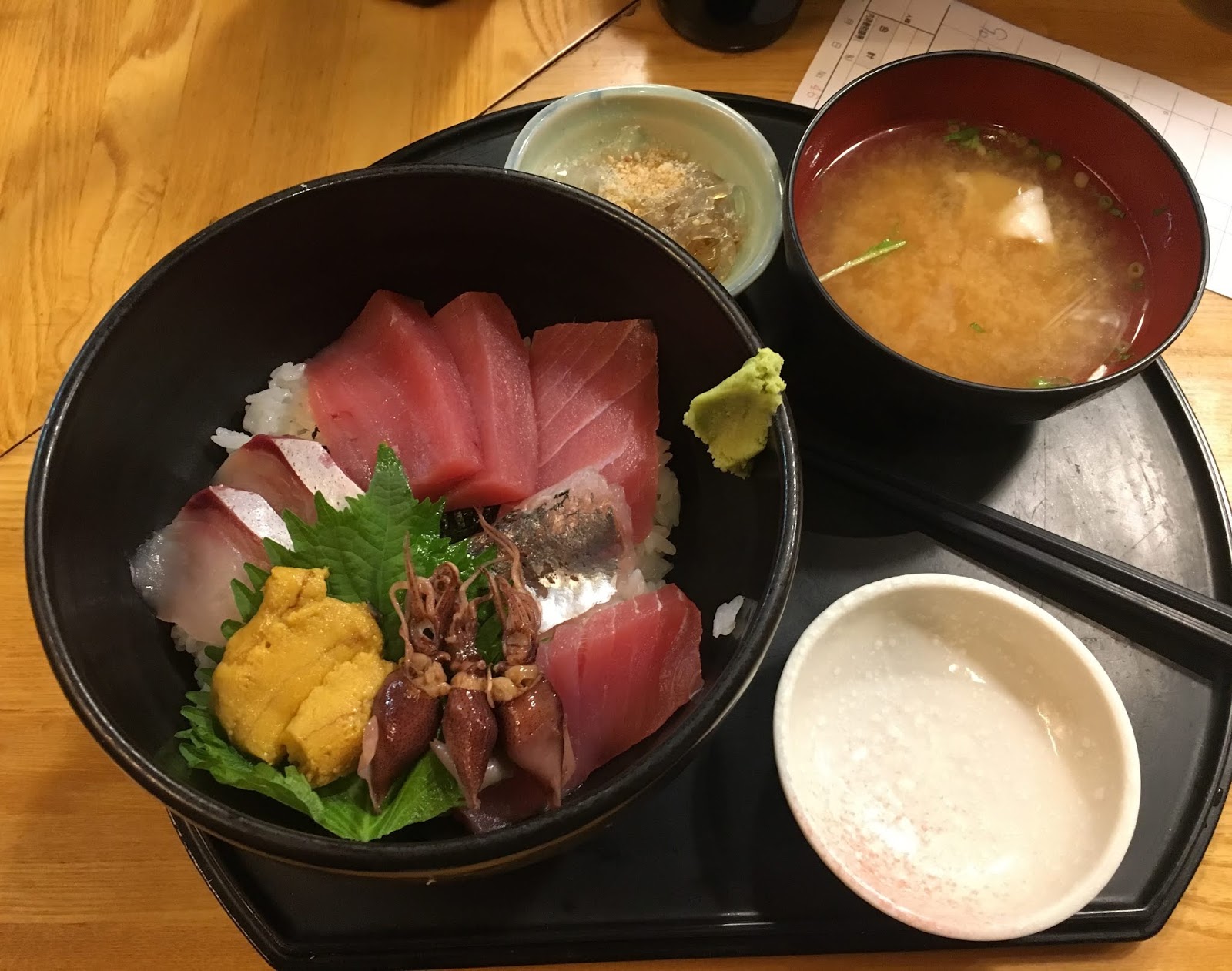
Sadness aside, My mission was to get to the fish market. I had read that you aren’t exactly allowed inside the actual market apart from on only 1 day of each month, but obviously I hadn’t checked so I just went anyway. Naturally, I got lost. Or to be more specific, I was too intimated by the security guards at the entry to the market so I just carried on nonchalantly. As if a tall white European boy could ever look inconspicuous whilst randomly strolling through Nagahama… This actually took me on a nice detour to the port, where I attracted several strange looks from a woman walking out of her house and an old man on a bike who cycled past me. The Seven-Eleven’s wifi allowed me to then rack up the courage to walk back to the market with actual directions, where I found the restaurant I was looking for, and what followed was perhaps the best kaisendon I’d ever have in my life. 

For a mere 1,080 yen (£7.56). I’d not had sea urchin in many, many years, and it is just one of the most incredible flavours on this good earth. Not to mention the generous assortment of tuna, yellowtail amberjack and baby squid. 10/10. Market food is the greatest, freshest, cheapest way to experience proper Japanese seafood.

After picking up a bag of chips and an ice-cold Asahi, I made my way down to what is undoubtedly the most magnificent spot in all Fukuoka; Ōhori Park and the Fukuoka castle ruins. Also preceded by a tiny little Japanese garden sandwiched between the ruins and Ōhori Park. I have never seen so many dragonflies in one place at one time. 

Ōhori Park is a large lake. It has a couple of islands that stretch across the middle of it, joined together by bridges, so the very middle of the lake makes for a very relaxing afternoon spot to sit in the shade surrounded by turtles, ducks, and a healthy serving of middle-aged joggers. It makes sense that this is one of the most photogenic places in this city. Crystal-clear blue waters under a blue sky on a hot July day is a recipe for any perfect picture, but on top of that a perfect place to lie down and catch a quiet breath from the ever-moving Japanese city life. 

Tonight, I think I shall go out. I want to go out in town at night, and see what it’s like to live this city after hours. I might even swing by the park again later – it’s not like I’m about to catch a cold by being outside anyways.