The Digital and the Physical: Cindy Sherman at the Fondation Louis Vuitton

It is inconceivable that one’s mind should simply wonder to the ticket booth at the Tate Modern and ask for the price of admission of the latest Rothko or Hirst exhibition. Descartes would have had some strong words about this notion – it’s a bit complicated to leave behind your physical self when the two are intrinsically intertwined.

Yet we are experiencing a moment in the practice of curation where the delivery of artistic material to the minds of many may no longer depend on a physical presence of the consumer. The closure of both private and public institutions, museums and galleries in the wake of the (ongoing, wear your f*cking mask!) pandemic has left many in the art world scratching their brains as to how the consumption of art can continue behind closed doors. Luckily the digital age we live in has managed to find a temporary fix to satisfy the needs of people interested in art.

Louis Vuitton Foundation, Paris.

Cindy Sherman (1954-), prolific “Pictures Generation” American artist focusing mostly on photography, is on show at the Louis Vuitton Foundation in Paris. Or rather, she should have been, and I should have been to see it. A collection of her works from 1975 onwards, including the notable Untitled Film Stills and Sex Photos, this exhibition was meant to show a critique of established conceptions of identity, femininity in the fashion and cinema industries. It is now available in an online tour, hosted by the curators of the Louis Vuitton Foundation.

Untitled #475, Cindy Sherman, 2008.

It opens many questions on the nature of experiencing artwork. The phrase “this art speaks to me” is not just a hipster catchphrase but a reflection of the social bond being formed between the art and the viewer through a moment of uncertainty. Abductive reasoning – Gell (1998)’s theory argued that art could “create” its own meaning and a rapport with a viewer upon being observed. If this is the case then it fundamentally demands the presence of a physical person to complete this two-way social interaction from which meaning can be determined. I wonder to what extent the lack of a physical mediator takes away from Gell’s process, therefore devaluing the artwork and not allowing it to entrance its viewer in the same natural way that Gell would have us see it. Certainly, this reality allows for the access to and ability to accumulate cultural capital that Bourdieu would see as crucial for the cultural differentiation of the non-distinctive human body (Keat, 1986). In a public health scenario this is ideal.

It is fitting that Cindy Sherman’s work is almost entirely focused on criticising the roles of the body in society, with particular note to the role of the female body taking positions of power in the cinema industry. Untitled Film Stills (1977) projects Sherman, a woman, into traditionally roles of producer, director, photographer as well as model and actress. Her work transgresses established norms in this industry, and through single frames she is able to tell a whole story that throws down challenges to these norms.

Untitled #84, Cindy Sherman, 1978. (Film Stills).

The virtual environment gives the curators absolute power over the viewing experience of Sherman’s work. A blessing and a curse as it would seem to interfere with Gell’s process, yet through proper delivery the body of work can be exhibited with flair and style whilst staying true to the motivations of the artist – and through this proper delivery, much to the credit of the curators of the FLV, their chronological curation of Sherman’s work could potentially lend itself to a Gell-like process that distills the intended meaning in a viewer in a natural way, perhaps even sidestepping the evident barrier that is a computer or phone screen.

Sex Photos removes Sherman from the work almost entirely. Just as we, the viewer, are removed from the gallery the artist is removed from the work in favour of mannequins in grotesque situations. The criticism of the highly-sexualised female form in contemporary mass media is evident, and in some frames Sherman can be glimpsed as a reflection in an object in a Baudrillard-esque simulacrum, or Platonic shadow or what is a true human being and by extension, a woman.

Untitled #250, Cindy Sherman, 1992. (Sex Photos).

Gell’s dialogue between art and viewer is in this series being held between a representation of Sherman and a digital interface of the viewer – the relationship between human and art has been reduced to a completely abstract and intangible one in these times. Further dehumanisation of the human form through the Clown Series serves only to remind us, the viewer, that the times of pandemic have been complicit in the depriving of basic artistic interactions that illustrate the blank cultural canvases of our bodies (Bourdieu, 1985).

Untitled #417, Cindy Sherman, 2004. (Clowns).

This is not to say that online renditions of exhibitions like Cindy Sherman à la Fondation are “good” or “better” – these words are not part of the discussion. This examination of the online dimension to artistic media reveals the subtleties of how humans interact with art and culture, and how times of extreme circumstances have forced a re-thinking of these interactions. The very meaning of art is fundamentally linked to the experience of being in front of it, with one’s own two eyes. But perhaps in the future the experience learnt from the pandemic and through efforts like The Fondation Louis Vuitton will reveal a new dimension for the consumption of a different form of art.

Epilogue

*this is the most recent post that is actually on this blog. The conclusion to my summer travels, and a long-overdue one. Thank you for waiting, and I hope you have enjoyed reading this blog’s travels*

It’s taken a broken adaptor and couple of days for me to separate myself from my laptop screen, but said separation has allowed me to reflect on my time and enjoy the closing days to the maximum. As my grandmother rightly wrote to me, this trip deserves a conclusion and it would be insane to not give myself and whoever is actually reading this closure.

Claude Lévi-Strauss once wrote that “feasts are good for eating, drinking, and thinking“. It is on this thought that I have been dwelling in the last few days as I really felt myself and my ability to converse coming into their own. I’ve often interpreted Lévi-Strauss’ comment to take “thinking” as an overarching observation on the innate social effects that commensal eating and drinking have on human beings. Sharing is caring: whether it be sharing in an experience, or the last beer of an evening. Social bonds manifest themselves stronger when there is something to link the divide between two or more people. The divide in this case, can be a language barrier that frequently has had me at a loss in trying to communicate my desires, likes and plans through the often mysterious structure of Japanese.

My time living in a host family is exactly and more than what I expected, as I have mentioned briefly in previous updates. Japanese hospitality and kindness is unparalleled. My road trip to Shimane Prefecture last week with my host mother, her son and gramps allowed me to fully appreciate this for the first time. The seemingly mundane experiences of visiting a museum together, laughing over a meal that was too hot or reading a (ominous) fortune at the Izumo Taisha Grand Shrine might not be innately exciting, but these small things are what allow for a common ground to be forged between people that can make human interactions so valuable. Naturally, the beauty of what was visited must not be forgotten or underestimated, as all my experiences in Japan have been.

It also happened to finally coincide with the official end of the rainy season, as announced to me triumphantly by heralding in a scorching heat that persisted for the remainder of my time, embellishing the Adachi Museum of Art and the Grand Shrine much to their advantage.

The heat and a sky of perfect blue led me by the hand on Friday morning to the famous island of Miyajima. I was admittedly nervous as I was on my way to spend the weekend with Prof. Kitano and his class from the Hiroshima University of Economics; unsure if I would be an unwelcome presence or stick out like a sore European thumb. I was relieved to leave on Sunday after what could possibly have been one of the most happy and unique memories that I might have in my life so far.

(Kitano is the charmingly witty and ridiculously intelligent man who put me in contact with my host family). I received a VIP tour of the Itsukushima Shrine and the Daishō-in Temple by the vice-chief monk, and wrapped it up with an Okonomiyaki and grilled oyster lunch with Kitano. It was at this point that I met the class – third year media and business students, and for 2 days I felt as though I was one of them. We ate dinner together, drank (lots) together and talked until early. It felt as though Lévi-Strauss himself were perched on my shoulder, contently watching as we shared a communal Sukiyaki and as we slowly became better and better friends. I struggle to remember a different time where I have been more warmly welcomed immediately into a group without question.

To take things to a more poetic standpoint the climb up the albeit small Mt. Misen the next morning was an experience that slowly carved a bond out with every mossy, damp step that brought us closer to our goal. The reward of a view of the Seto inland sea, dotted with islands in the distance looked like a scene that could have been painted by Yokoyama Taikan in the halls of the Adachi Musuem. Islands shrouded by undulating mirages, with white beaches and tree-covered hills in a sea of deep deep blue. It is a view that for me might sum up my entire trip, tangible yet slightly surreal when I look back. An experience that stands as alone as some of the distant islands that I could see shrouded in excitement and mystery.

I’m glad and honoured that I made friends in that short period of time. After sitting in Japanese classes learning the formalities and grammar for 8 years, being able to kick back with a beer and casually joke about them with young people in casual Japanese is a reward unlike no other after so many years of studying and learning.

Hitching a ride back to Hiroshima on Sunday evening as passenger on Reishi’s motorbike was unbearably cool. I now understand why people ride motorbikes. He even invited me to the onsen and a dinner at his dad’s ramen restaurant. Pretty awesome guy.

I was sad to leave my host family and my new friends yesterday morning. However, all good things must come to an end. I wrote this whilst in transit in Hanoi, and the feeling of retracing my steps is nostalgic and is helping me to come to terms with the month that has just elapsed, and the things that I’ve done, seen, eaten, drank, the people I’ve met, the conversations I’ve had. It gives me a taste for more. More things that I can experience, more things that I can crystallise in my mind as invaluable memories. Travelling alone has provided the freedom that I crave to immerse myself into myself and the things that are happening directly around me at every second. I can think of no other time when I have not relished every single second of a day. The blog has more or less kept me in touch with the world, and you will be relieved to know that this is the end of travel blogging. Thank you for reading. Expect more and more varied blogs from here on out.

広島: Bending Adversity (2)

city of 300,000

can we forget that silence?

in that stillness

the powerful appeal

of the white eye sockets of the wives and children who did not return home

that tore apart our hearts

can it be forgotten?!

Tōge Sankichi, 1951

It seems only logical to me that places such as Hiroshima, and Nagasaki, are designed to crush your soul in the face of indescribable cruelty and horror with the intention of getting their message across. I thought I knew this by now, and would be able to handle the Atom Bomb museum in Hiroshima, and yet again I found myself weeping before what I saw and learnt.

Hiroshima carries a far greater symbolic meaning in the Japanese psyche. Being the first location of an atom bomb being dropped on people, and with a far larger death toll (140,000 are thought to have died by the end of 1945), Hiroshima stands proudly today as a symbol of exactly what the Japanese way of life is about. Getting back on ones feet. Forgiving, but never forgetting. Rebuilding and reforming, with a mission and a purpose. The peace memorial with its simple grace represents not only the horrors of war and the sacrifice of thousands, but also as a worldwide flagship for peace and a gathering place for movements for the abolishing of nuclear weaponry. The museum is sobering, naturally, it does not hide the truth and is to the point. There are no frills here. Such a message has no time for frills.

It is also here that I learnt that the dropping of the bomb on the 6th of August 1945 also killed hundreds of non-Japanese; among the dead were also southeast asian exchange students, Korean and Chinese immigrants, and even American prisoners of war. The loss of the innocent in times is a result of the hideous nature of such indiscriminate mass murder. And while every day, innocent children, women and men still die every day in less fortunate places, the lessons still don’t seem to have sunk in. War seemed to be an adequate excuse for accidentally vaporising people who bravely bade their time in prisoner camps, only to die at the hands of the ones they serve alongside their enemies, and it still seems to be adequate today. It was all well and good to sentence Nazis to death in Nuremberg in the 50’s, but what is happily brushed under the carpet and excused by wartime circumstances is the unquestionable crime against humanity that is the birth of nuclear weapons.

The famous atom bomb dome on the banks of the Motoyasu river in Hiroshima should stand forever as a painful reminder of what these weapons of mass destruction do to families, cities and nations until nuclear warfare is outlawed and removed from the surface of this planet. If Prometheus was banished to infinite suffering for stealing the secrets of fire, then perhaps a nuclear holocaust is what humanity deserves for trying to meddle with things that they shouldn’t. 

A frail olive tree stands in the courtyard of the victim’s memorial, breaking its way through concrete towards the clouds with biblical determination.

The city of Hiroshima lives, just like Nagasaki, reborn and proud. Like every other Japanese city, the people of Hiroshima swamp the shopping streets, pile into pachinko parlours and crowd their local Okonomiyaki shops. This city lives for the future. I cheered myself up with a sushi lunch and followed it up by a trip to the Hiroshima Museum of Contemporary Art – hidden on a forestry hill in the east of the city, where signs literally banned some entrances due to very real danger of the local hornet population.

And on the topic of Okonomiyaki, dinner that night at home greeted me with a portable flat iron sitting on the dinner table – Okonomiyaki, homestyle. I’d eaten enough Okomiyaki in my life and watched enough youtube videos to really impress my host family with my pancake flipping skills, but of course i didn’t admit that.

This is a long post. But it’s an important one. It’s also important to never forget who the real war criminals are, and important to remember that those people will never face trial for their crimes against humanity, and the thousands of innocents who have died in Japan at the hands of these monstrosities will never know justice, only pain and sombre remembrance.

Brexit: Clash of Cultures

“Should I stay or should I go?” Mick Jones posed the unanswerable question back in 1981, and 37 years ago we still don’t know the answer. Going still might mean double the trouble – but these troubles wander slightly further away from the punk rock problem of an indecisive romantic interest. It’s a question that plagues me and many more of my compatriots who have adopted England’s green and pleasant land as our own, perhaps not draped in an 80’s leather jacket but more in the guise of a growing gulf between the United Kingdom and Europe.

Easy to figure out by now that I’m talking about the elephant of all elephants in the room, Le Brexit, in all its glorious disgrace. My proud status of Franco-Swede now only serves to torment and question my identity as my adoptive homeland grapples with its own. Who am I ??? Qui suis-je ??? Vem är jag ??? Ironically enough, as much as I’ve come to distance myself with being British or being called “English”, I’m considered exactly that in both my home countries. People in my situation now sit in a bizarre uncanny-valley-esque state of ethnic identity – not really one, nor the other.

Brexit represents an affront on the freedom of Europeans. It’s that significant. It defines my future, ostracises my family’s heritage and nullifies theirs and my contributions to a country that we call home.

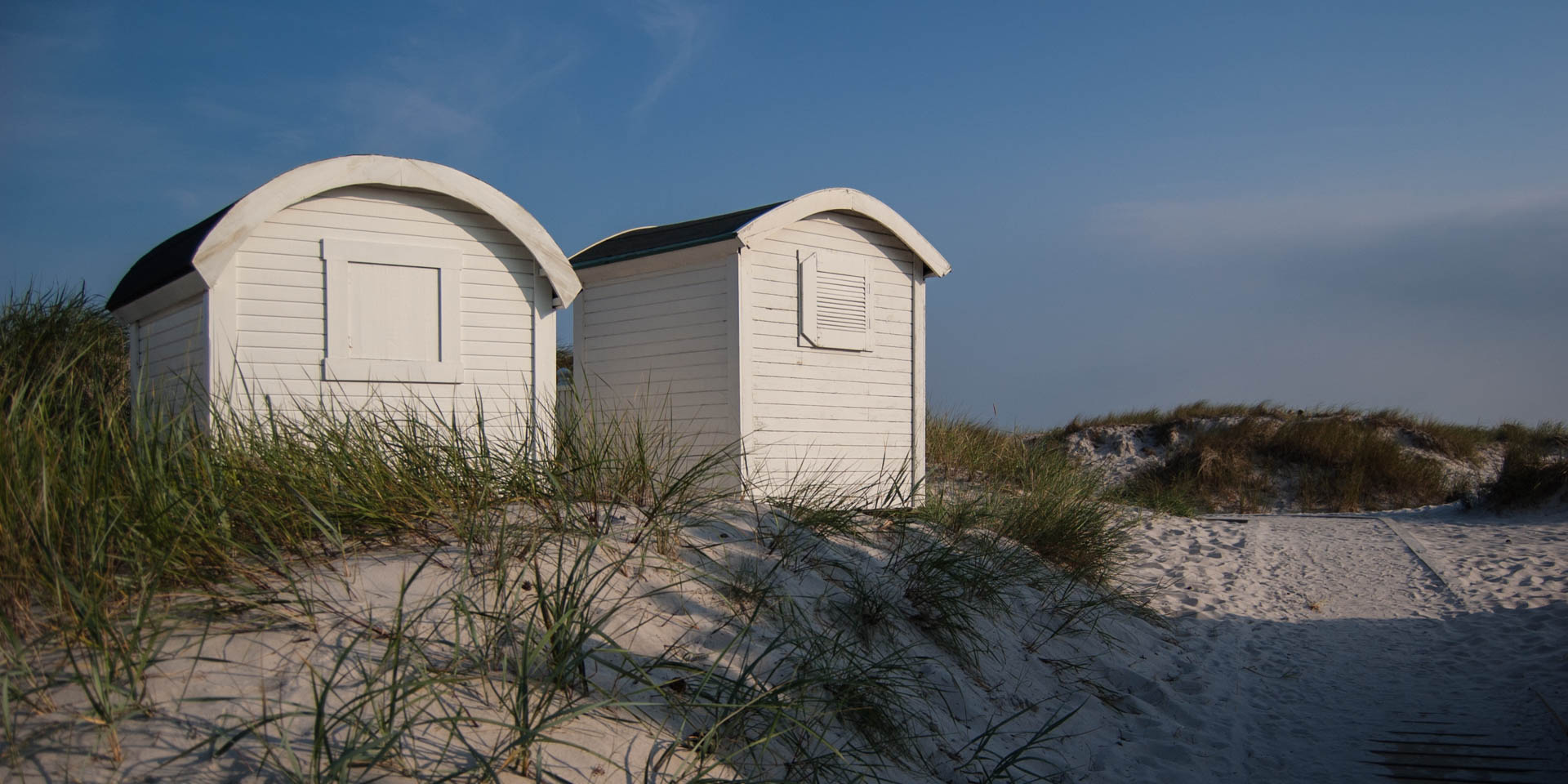
Image result for ljunghusen

I don’t have a British passport. I proudly hold my Swedish and French passports as tokens of my belonging to a modern society. Global, international, multilingual. Leave supporters “want their country back” – from who ?? Nationalism, or at the very least, a strange kind of misguided patriotism that bridges xenophobia and ignorance with racist populism, is a strange thing. The idea of being “British”, according to Benedict Anderson, doesn’t really exist – it’s socially constructed. The idea that the Brexiteers have that Britain must be returned to the British is laughable because there is no such thing as vital, ethnically distinct “Britishness”, just as much as there is no “Frenchness” or “Swedishness”. The cultural identity of this country is diverse and multifaceted, and that is what it means to be British. The ignorance of the average Brexiteer seeks to destroy the very essence of being British, ironically.

As time goes on and as our societies reach further out into the global scene, more and more people will be able to claim more than one nationality – a mixed heritage is becoming the norm. It doesn’t really make sense to close borders and close off oneself to the world that is moving in that direction.

Having a mixed heritage was confusing as a child, being educated in England but spoken to in a mix of Swedish and French at home marked my childhood with a longing, a desire to be just like the other kids at school. Something always felt off. Maybe it was the way my lunchbox had “weird” snacks like brown bread and French biscuits rather than Cheesestrings and Walkers’ Salt and Vinegar. I figured out long after that the difference was that I simply just wasn’t a real English boy. Yet, I wanted to be that English boy. As a child it was all I desired, just to feel slightly less alien in my year 4 class. And in the mind of an 8 year old, the seminal question of who I was began to fester. 

Image result for whitgift school

People often consider me English. Secondary School reeled me in closer to the 8-year old’s ideal of fitting in – the English boy. I could pass for a Brit anywhere for sure. Brexit took that distorted, lonely, badly-adjusted desire and threw it to the bottom of the garbage. Never did I think that my friends and I would go to school and have teachers apologise to us for the thousands of young people who couldn’t vote for their opinions. The idea of being English, or British, disgusts me in the wake of the 23rd of June 2016. The government who said they would stand and fight for us either ran for the hills, turned on us or eventually disappointed us. As close as I could be to British, my state of mind had never been further from it.

Brexit is an embarrassment for the British government. It’s an embarrassment for the British people. The ineptitude of the negotiations reflect poorly on a country that supposedly thinks it is stronger and more independent without the EU. The bickering within the cabinet is comparable to hyenas scrabbling over a carcass. It’s no surprise that the Emmanuel Macron called the Brexiteers “liars” – Brexit means Brexit after all, but the UK government is under the illusion that it will retain all EU privileges and leave all costs and responsibilities behind. And the people who voted for it are suffering too. It’s a costly affair that is neglecting the issues at home such as housing, education, welfare, taxation and immigration in favour of worrying over a decision hailed as England’s redemption that 3 years on has cost the UK 66 billion pounds. This fact doesn’t really need to be elaborated on.

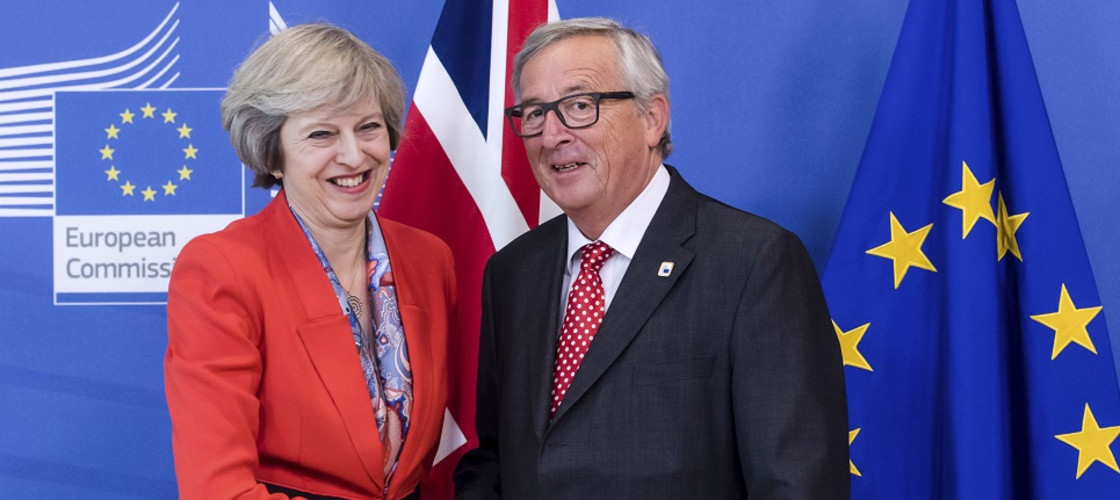
Image result for theresa may and jean claude juncker

The departure of Theresa May this month is without a doubt the most hilarious and shameful move in British politics to date. The consequences of her blatant power grab that magically changed her view on the UK’s relationship with the EU could not be any more fitting. Modern politics is the separation of a quest for individual power and status from a noble position of authority where one cares for one’s people and one’s country. Driving bitter but necessary negotiations into the ground only to leave it in the hands of even more incompetent people like Boris Johnson or Nigel Farage or others cannot be forgiven by shedding a tear as one resigns.

I once thought that I would have to give up one of my passports in order to claim British citizenship. Luckily, I don’t, and I say luckily because I know that many others will have to. Even with this privilege, I won’t apply for the British passport. Call me ungrateful, but no one is more ungrateful than the British public and government who has so little regard to immigrants who have worked, paid taxes and studied to help this country not fall into ruin. Why should people reject their heritage and their roots just to stay in a country that they’ve given everything to? In the wake of Brexit and June 23rd 2016 it feels more and more like defeat to attempt to claim British citizenship. To lie about my identity, and to take on a label of British in order to just resume my daily life – I’d be living an unforgivable lie to myself and to my heritage of which I am so proud and hold so dear to. It’s a dilemma to which the answer still is just as unclear to me as the Brexit deal itself.

So where does this leave me? And people like you, the reader, who perhaps also hails from a European background, not to mention those who have come from much further? Well, it leaves us behind. Neglected, confused, stuck in our uncanny valley. To bite the bullet and take the high road, abandon everything we’ve worked for, fought for, built and curated in England’s green and pleasant land might not make William Blake turn in his grave but it certainly makes me and many others turn in our sleep every night. Protest. Demand for public opinion. Shout as loud as we can. Boycott Brexit-supporting companies (yes, even spoons). Living in permanent anxiety of whether or not I can stay in my home country doesn’t suit me. The idea of “moving back to ___” doesn’t really make sense – I’ve always lived in London. London is my home. There is perhaps still a place for my parents to go back to, but not for me. And as The Clash plays on in the background in my room, I still don’t know if I should stay or if I should go. 

https://www.independent.co.uk/news/business/news/brexit-cost-how-much-uk-economy-money-spent-a8854726.html

Anderson, Benedict R. O’G. (1991). Imagined communities: reflections on the origin and spread of nationalism. (Revised and extended. ed.). London: Verso.

The Human Condition on a nice mild Tuesday morning

Monolithic structures aren’t exactly everyone’s breakfast of choice, but this morning my coffee and pain au chocolat is accompanied by the 10th millennium BC ceremonial site of Göbekli Tepe in Turkey. The power of humankind to shape the environment and exert our culture and thought upon the landscape is awe-inspiring and terrifying, when thought about in the sense that this structure has been hidden away under the feet of locals since its abandonment in the 8th millennium BC until 1963. The shaping and manipulation of the natural world to our will is testament to our collective intellect and power. Yet everyday when you or I exert ourselves upon the world around us, through actions that could be as mundane from weeding your garden or talking to a teacher or a friend to actions as huge as holding back rivers with dams or tunnelling deep underground to reach the very last reserves of fossil fuels, these actions take an effect on the world around you. Call it the Butterfly Effect, or Newton’s third law: every action taken results in an effect. 

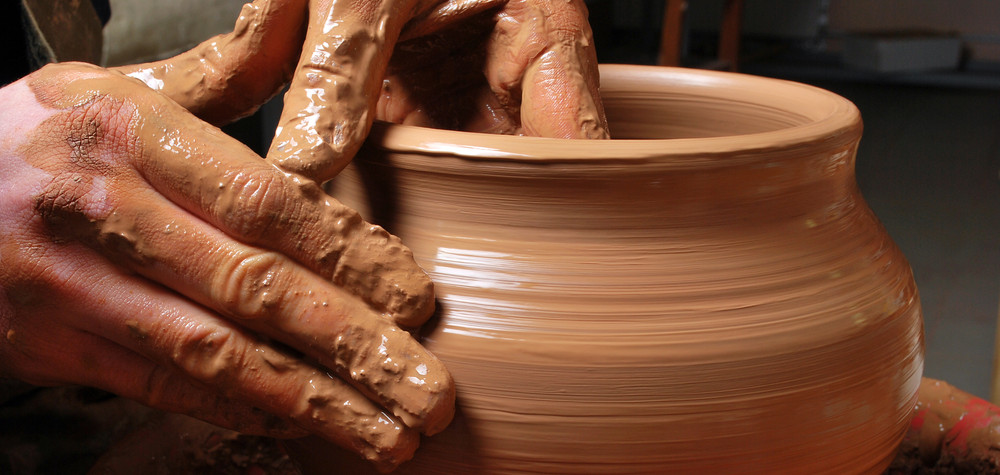
To quote Johann Gottlieb Fichte’s The Vocation of Man (1800); “you could not remove a single grain of sand from its place without thereby … changing something throughout all parts of the immeasurable whole”. However i’m more and more inclined to think that the same can be said in the opposite direction, and the ideas of anthropologists like Bruno Latour, Tim Ingold and Alfred Gell suggest that humans and our actions are merely a result of the natural world’s influence upon us – that nature and culture exist in a symbiotic relationship of agency, well, it’s basically telling us that our actions and our perceived intentionality behind our action isn’t really all that we think it is. Simplified, someone like Lambros Malafouris’s theory that a pot “shapes itself” thanks to the hands of a potter again (Malafouris, 2008) hammers home the banality and agency-less nature of human action. Our culture, and therefore our individual actions, are reflections of the natural world’s influence upon us.

Or at least, it is perceived to be so. It becomes increasingly difficult to find meaning in everyday routine, action and tasks when your seniors drill into you the notions that “you have no free will”. To muster the energy to write an essay, or to read a book, or to cook myself dinner, or to try and come up with a melody, or to buy a sleeve for my laptop, or to do my laundry, or to see my friends, or to call my family, or to get out of bed seems impossible when you realise that essentially, it has no meaning. Maybe Camus was right in saying that the only moral and logical solution to solve the existential crisis that is the human condition is to commit suicide ??? Perhaps a slightly extreme solution…

So – finding that energy to do the banal and the mundane, where can it be found ? It is by *creating* meaning for oneself in one’s everyday tasks, and assigning meaning and value to the daily life. Maybe such a monumental site like Göbekli Tepe can arguably be a manifestation of a naturalistic cosmology through a human interpretation, but that fact that it still remains after 12,000 years after being built by human hands only reinforces the (perhaps) misled belief that the free will of humans is alive and well. This seems a fitting analogy for a first post on this blog, as it definitely doesn’t mean much, certainly won’t be read by millions or be around in 12,000 years – but it’s something that will allow me to make meaning and give value to daily life and the things that I experience. I challenge you, the reader, and encourage you, to find meaning in everyday things and thoughts. Ask the questions, ascribe meaning to those questions, and find an outlook on the world which allows for enjoyment and fulfilment.

To be honest, this blog probably won’t answer all the questions I will flood it with. But at least it will give me an outlet that I consider meaningful to tackle them materially rather than let them float away on my subconscious.