The cowspiracy and its dietary solution

Recently a stalwart feature of logging into BBC News or the Guardian every morning on my phone revolves around anything from freak storms to intentional burning of acres and acres of cherished rainforest. We’re talking none other than climate change, global warming, or whatever you would like to call the situation of impending doom.

This isn’t hyperbolic of me, I haven’t been kept awake at night by monsters for a very long time but this is a monster that I think keeps many of us up at night in existential fear at the state of affairs. As the youth become more and more exposed to and engaged in the reality of the situation through social media and trailblazers (pun not intended) like Greta Thunberg, who galvanise the masses of the youth into actually caring about the environment ravaged by profit-driven governments and big corporations.

GCSE Geography is great. Learning about the greenhouse effect is great. It teaches the kids the bare minimum about how it is that every year seems to be the “hottest July ever”, but withholds the darkest shade to the capitalist machine that does nothing but take from the earth – the aptly named Cowspiracy.

Documentaries like Netflix’s Cowspiracy is propaganda in its purest form. It scares you, draws back the curtain, reels you in, engages you personally until you reach the same conclusion that I did: animal agriculture and the mass production of meat and dairy products is singlehandedly the most damaging business to our planet’s environment and climate, and there are people actively seeking to cover this fact up and protect this industry.

Even though I am aware that Cowspiracy is a propaganda piece, I respect it for working and happily accept that I fell for it. Which might not be such a bad thing. Kip Andersen’s frustrating and laboured journey to uncover the truth behind the massive power that the agriculture industry and lobbies hold over climate activists and climate organisations is well-constructed and lends itself well to the heavily guarded secrets that are the side effects of mass livestock farming. For example, the wastage of water growing beef especially is astounding – to produce one pound of beef (453.6g) takes 2,500 gallons (9,463.6 litres). All this waste leaving the animal agriculture industry responsible for 18% of global greenhouse gas emissions every year. The reality of raising animals for food on such a massive scale is completely unsustainable in terms of space and resources. Driving your car is insignificant in comparison to the methane-producing machine that churns out burger patties and milk every single day.

Why more people don’t know about this? Lobby groups (in America at least) have kept a stranglehold on the information surrounding how damaging animal industry is, trying to keep a system that promotes the mass production and commodification of luxury foods like meat running so that they can fill their pockets while the environment crumbles. The availability of meat is insane, when you think that you can buy a coaster-flavoured puck of beef rammed between soggy buns for £4.99. The mass production is a problem. And to feed and water the 1,5 billion cattle alive today, vast forests are cleared to grow crops like soy, of which 70% of the global consumption of soy is claimed by livestock. A meat-centred diet is a commercial and capitalist fabrication to ensure that the industry can continue allowing animals and the environment to needlessly suffer when there are much better and healthier alternatives.

Going plant-based, or vegan, is the obvious and most eco-friendly solution. I found the resolve to make this change in the wake of watching Cowspiracy, and for a week and a half I got to grips with plant-based diets before coming to a realisation – going vegan is excellent, but it is also unsustainable and not accessible. I found myself constantly hungry, lacking in variety and most importantly, broke. Veganism is expensive. Veganism is limiting. It’s healthy for sure, but it is also repetitive. In my opinion going plant-based is not a viable solution to the problem given that there are 8 billion people on this planet, many of whom can’t afford soy meats and milk alternatives, or have even heard of them. I came to this conclusion regretfully as I embarked on this mission to change my habits with passion and determination. However, going vegetarian is a step in the right direction, and to be honest one finds oneself eating vegan most of the time anyways. Milk, butter, meat, fish are out. Vegetables are the new cool.

Veganism is the ideal that everyone should strive for, but for those who cannot go all the way going vegetarian is good enough. It’s about reducing, and managing what we eat and where it comes from. It is the most accessible and realistic expectation if we want to help solve the climate issue by tackling people’s unhealthy and un-environmentally friendly diets. Let meat and fish and other animal products stay as luxuries, as they should be, perhaps ensuring a better future for these animals as well as the environment.

http://www.cowspiracy.com/facts

http://theconversation.com/five-ways-the-meat-on-your-plate-is-killing-the-planet-76128#targetText=Livestock%20farming%20has%20a%20vast,produced%20greenhouse%20gas%20emissions%20worldwide.

広島: Bending Adversity (2)

city of 300,000

can we forget that silence?

in that stillness

the powerful appeal

of the white eye sockets of the wives and children who did not return home

that tore apart our hearts

can it be forgotten?!

Tōge Sankichi, 1951

It seems only logical to me that places such as Hiroshima, and Nagasaki, are designed to crush your soul in the face of indescribable cruelty and horror with the intention of getting their message across. I thought I knew this by now, and would be able to handle the Atom Bomb museum in Hiroshima, and yet again I found myself weeping before what I saw and learnt.

Hiroshima carries a far greater symbolic meaning in the Japanese psyche. Being the first location of an atom bomb being dropped on people, and with a far larger death toll (140,000 are thought to have died by the end of 1945), Hiroshima stands proudly today as a symbol of exactly what the Japanese way of life is about. Getting back on ones feet. Forgiving, but never forgetting. Rebuilding and reforming, with a mission and a purpose. The peace memorial with its simple grace represents not only the horrors of war and the sacrifice of thousands, but also as a worldwide flagship for peace and a gathering place for movements for the abolishing of nuclear weaponry. The museum is sobering, naturally, it does not hide the truth and is to the point. There are no frills here. Such a message has no time for frills.

It is also here that I learnt that the dropping of the bomb on the 6th of August 1945 also killed hundreds of non-Japanese; among the dead were also southeast asian exchange students, Korean and Chinese immigrants, and even American prisoners of war. The loss of the innocent in times is a result of the hideous nature of such indiscriminate mass murder. And while every day, innocent children, women and men still die every day in less fortunate places, the lessons still don’t seem to have sunk in. War seemed to be an adequate excuse for accidentally vaporising people who bravely bade their time in prisoner camps, only to die at the hands of the ones they serve alongside their enemies, and it still seems to be adequate today. It was all well and good to sentence Nazis to death in Nuremberg in the 50’s, but what is happily brushed under the carpet and excused by wartime circumstances is the unquestionable crime against humanity that is the birth of nuclear weapons.

The famous atom bomb dome on the banks of the Motoyasu river in Hiroshima should stand forever as a painful reminder of what these weapons of mass destruction do to families, cities and nations until nuclear warfare is outlawed and removed from the surface of this planet. If Prometheus was banished to infinite suffering for stealing the secrets of fire, then perhaps a nuclear holocaust is what humanity deserves for trying to meddle with things that they shouldn’t. 

A frail olive tree stands in the courtyard of the victim’s memorial, breaking its way through concrete towards the clouds with biblical determination.

The city of Hiroshima lives, just like Nagasaki, reborn and proud. Like every other Japanese city, the people of Hiroshima swamp the shopping streets, pile into pachinko parlours and crowd their local Okonomiyaki shops. This city lives for the future. I cheered myself up with a sushi lunch and followed it up by a trip to the Hiroshima Museum of Contemporary Art – hidden on a forestry hill in the east of the city, where signs literally banned some entrances due to very real danger of the local hornet population.

And on the topic of Okonomiyaki, dinner that night at home greeted me with a portable flat iron sitting on the dinner table – Okonomiyaki, homestyle. I’d eaten enough Okomiyaki in my life and watched enough youtube videos to really impress my host family with my pancake flipping skills, but of course i didn’t admit that.

This is a long post. But it’s an important one. It’s also important to never forget who the real war criminals are, and important to remember that those people will never face trial for their crimes against humanity, and the thousands of innocents who have died in Japan at the hands of these monstrosities will never know justice, only pain and sombre remembrance.

長崎: Bending Adversity

“If the radiance of a thousand suns

Were to burst at once into the sky

That would be like the splendour of the Mighty One…

I am become Death,

The destroyer of worlds.”

As Robert Oppenheimer quoted the Bhagavad Gita upon witnessing the first successful test of the world’s first atomic bomb on July 15th 1945, little did he know how true those ancient and earth-shattering words would ring come August of the same year. And it is these words, and Oppenheimer’s sad realisation at his monstrous creation, that have been with me today as I walked the streets of Nagasaki. A sobering and humbling afternoon to put it simply.

 The train ride from Hakata did not prepare me for what I was about to experience. The atomic bombings of Hiroshima and Nagasaki are casually swept over in history class at school, always presented as the final victory and grand finale of the theatre of the Second World War. The reality is much different. The Nagasaki Atomic Bomb museum (原爆資料館) is only a couple of charming streetcar stops away from the station where my hostel is located, and the elegant and to-the-point museum is poignant and brutally blunt. It would have been impossible for me to have been in Kyūshu without coming face to face with the suffering and loss that was experienced here in Nagasaki. I wept for the 75,000 that were vaporised instantly in front of the testimonies of the survivors.

Testimonies of children who buried their mothers, husbands who buried their wives, and sisters who buried their brothers. The inhumanity of such an attack is unspeakable. I can only give credit to the museum for rightfully bringing me (and others) to tears over this act, not to mention over the thousands more who died in the years afterwards.

But it is the resilience of Nagasaki, and of the Japanese people in general, that struck me the most. The will to carry on, to never give up, something that I picked up on vaguely many years ago in David Pilling’s Bending Adversity (read it, it’s incredible). The beautiful peace park that follows the museum, and the sombre memorial to the dead along with the preserved hypocenter (ground zero) along a beautiful little canal, is testament to how much this city is committed to preventing conflict and to moving on upwards from disaster. It’s heartwarming to walk these lively and upbeat streets today knowing that underneath them lay a nuclear wasteland of suffering only 73 years ago. I anticipate to find very much the same thing when I get to Hiroshima in a week.

The will to carry on. That is what I have managed to summarise Nagasaki, Japan’s historical cultural front to the world and a beacon of hope and strength in the south of a once war-ridden country, in one short day. An impression that genuinely made me appreciate sitting in front of my kaisendon on the quayside tonight. 

I pray (using the term loosely) that my generation, my brothers’ generations and those to come never have to experience the horrors of war that I have seen today. I will leave this city tomorrow more grateful for my life and grateful to be living in security than I was before I stepped off the train this morning.

I implore you all – those who are reading this – to go tonight to the Nagasaki Atomic Bomb museum’s English site and read for yourselves what you weren’t taught in GCSE history.

“What passing bells for these who die as cattle?

Only the monstrous anger of the guns.

Only the stuttering rifle’s rapid rattle

Can patter out their hasty orisons.

No mockeries now for them; no prayers, nor bells,

Nor any voice of mourning save the choirs,

The shrill demented choirs of wailing shells,

And bugles calling for them from sad shires.

What candles may be held to speed them all?

Not in the hands of boys, but in their eyes,

Shall shine the holy glimmers of goodbyes.

The pallor of girls’ brows shall be their pall,

Their flowers the tenderness of patient minds,

And each, slow dusk a drawing down of blinds.” 

Wilfred Owen, The War Poems (1917)

Brexit: Clash of Cultures

“Should I stay or should I go?” Mick Jones posed the unanswerable question back in 1981, and 37 years ago we still don’t know the answer. Going still might mean double the trouble – but these troubles wander slightly further away from the punk rock problem of an indecisive romantic interest. It’s a question that plagues me and many more of my compatriots who have adopted England’s green and pleasant land as our own, perhaps not draped in an 80’s leather jacket but more in the guise of a growing gulf between the United Kingdom and Europe.

Easy to figure out by now that I’m talking about the elephant of all elephants in the room, Le Brexit, in all its glorious disgrace. My proud status of Franco-Swede now only serves to torment and question my identity as my adoptive homeland grapples with its own. Who am I ??? Qui suis-je ??? Vem är jag ??? Ironically enough, as much as I’ve come to distance myself with being British or being called “English”, I’m considered exactly that in both my home countries. People in my situation now sit in a bizarre uncanny-valley-esque state of ethnic identity – not really one, nor the other.

Brexit represents an affront on the freedom of Europeans. It’s that significant. It defines my future, ostracises my family’s heritage and nullifies theirs and my contributions to a country that we call home.

Image result for ljunghusen

I don’t have a British passport. I proudly hold my Swedish and French passports as tokens of my belonging to a modern society. Global, international, multilingual. Leave supporters “want their country back” – from who ?? Nationalism, or at the very least, a strange kind of misguided patriotism that bridges xenophobia and ignorance with racist populism, is a strange thing. The idea of being “British”, according to Benedict Anderson, doesn’t really exist – it’s socially constructed. The idea that the Brexiteers have that Britain must be returned to the British is laughable because there is no such thing as vital, ethnically distinct “Britishness”, just as much as there is no “Frenchness” or “Swedishness”. The cultural identity of this country is diverse and multifaceted, and that is what it means to be British. The ignorance of the average Brexiteer seeks to destroy the very essence of being British, ironically.

As time goes on and as our societies reach further out into the global scene, more and more people will be able to claim more than one nationality – a mixed heritage is becoming the norm. It doesn’t really make sense to close borders and close off oneself to the world that is moving in that direction.

Having a mixed heritage was confusing as a child, being educated in England but spoken to in a mix of Swedish and French at home marked my childhood with a longing, a desire to be just like the other kids at school. Something always felt off. Maybe it was the way my lunchbox had “weird” snacks like brown bread and French biscuits rather than Cheesestrings and Walkers’ Salt and Vinegar. I figured out long after that the difference was that I simply just wasn’t a real English boy. Yet, I wanted to be that English boy. As a child it was all I desired, just to feel slightly less alien in my year 4 class. And in the mind of an 8 year old, the seminal question of who I was began to fester. 

Image result for whitgift school

People often consider me English. Secondary School reeled me in closer to the 8-year old’s ideal of fitting in – the English boy. I could pass for a Brit anywhere for sure. Brexit took that distorted, lonely, badly-adjusted desire and threw it to the bottom of the garbage. Never did I think that my friends and I would go to school and have teachers apologise to us for the thousands of young people who couldn’t vote for their opinions. The idea of being English, or British, disgusts me in the wake of the 23rd of June 2016. The government who said they would stand and fight for us either ran for the hills, turned on us or eventually disappointed us. As close as I could be to British, my state of mind had never been further from it.

Brexit is an embarrassment for the British government. It’s an embarrassment for the British people. The ineptitude of the negotiations reflect poorly on a country that supposedly thinks it is stronger and more independent without the EU. The bickering within the cabinet is comparable to hyenas scrabbling over a carcass. It’s no surprise that the Emmanuel Macron called the Brexiteers “liars” – Brexit means Brexit after all, but the UK government is under the illusion that it will retain all EU privileges and leave all costs and responsibilities behind. And the people who voted for it are suffering too. It’s a costly affair that is neglecting the issues at home such as housing, education, welfare, taxation and immigration in favour of worrying over a decision hailed as England’s redemption that 3 years on has cost the UK 66 billion pounds. This fact doesn’t really need to be elaborated on.

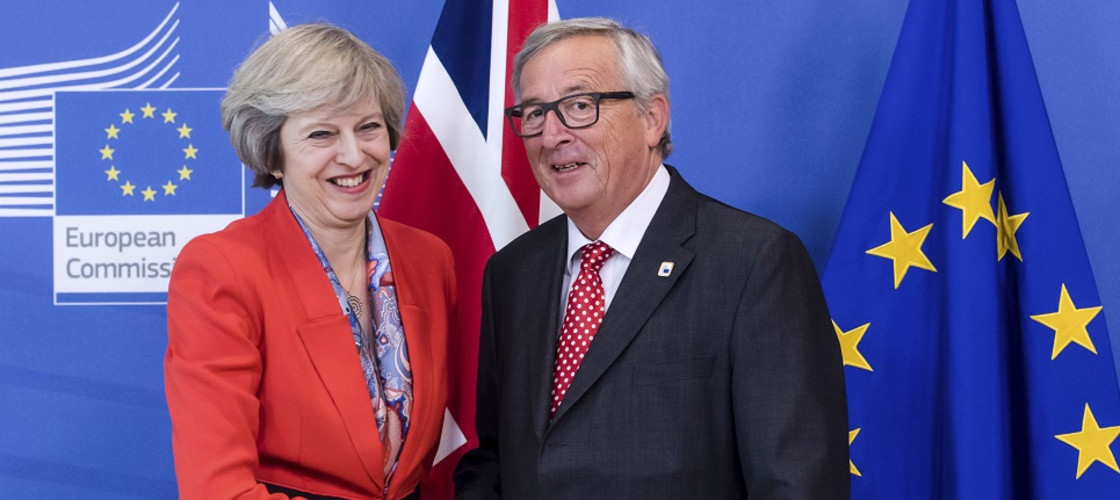
Image result for theresa may and jean claude juncker

The departure of Theresa May this month is without a doubt the most hilarious and shameful move in British politics to date. The consequences of her blatant power grab that magically changed her view on the UK’s relationship with the EU could not be any more fitting. Modern politics is the separation of a quest for individual power and status from a noble position of authority where one cares for one’s people and one’s country. Driving bitter but necessary negotiations into the ground only to leave it in the hands of even more incompetent people like Boris Johnson or Nigel Farage or others cannot be forgiven by shedding a tear as one resigns.

I once thought that I would have to give up one of my passports in order to claim British citizenship. Luckily, I don’t, and I say luckily because I know that many others will have to. Even with this privilege, I won’t apply for the British passport. Call me ungrateful, but no one is more ungrateful than the British public and government who has so little regard to immigrants who have worked, paid taxes and studied to help this country not fall into ruin. Why should people reject their heritage and their roots just to stay in a country that they’ve given everything to? In the wake of Brexit and June 23rd 2016 it feels more and more like defeat to attempt to claim British citizenship. To lie about my identity, and to take on a label of British in order to just resume my daily life – I’d be living an unforgivable lie to myself and to my heritage of which I am so proud and hold so dear to. It’s a dilemma to which the answer still is just as unclear to me as the Brexit deal itself.

So where does this leave me? And people like you, the reader, who perhaps also hails from a European background, not to mention those who have come from much further? Well, it leaves us behind. Neglected, confused, stuck in our uncanny valley. To bite the bullet and take the high road, abandon everything we’ve worked for, fought for, built and curated in England’s green and pleasant land might not make William Blake turn in his grave but it certainly makes me and many others turn in our sleep every night. Protest. Demand for public opinion. Shout as loud as we can. Boycott Brexit-supporting companies (yes, even spoons). Living in permanent anxiety of whether or not I can stay in my home country doesn’t suit me. The idea of “moving back to ___” doesn’t really make sense – I’ve always lived in London. London is my home. There is perhaps still a place for my parents to go back to, but not for me. And as The Clash plays on in the background in my room, I still don’t know if I should stay or if I should go. 

https://www.independent.co.uk/news/business/news/brexit-cost-how-much-uk-economy-money-spent-a8854726.html

Anderson, Benedict R. O’G. (1991). Imagined communities: reflections on the origin and spread of nationalism. (Revised and extended. ed.). London: Verso.