A Night in Hanoi

Vietnam. The ubiquitous destination to “find yourself” while you get your A-levels or IB remarked for a deferred entry to university. Top Gear did it first, and by the looks of it, they won’t be the last by a long shot. Cynicism aside, Vietnam has always been alluring to me and I can understand how alluring it is to thousands of tourists every year. I can also confirm in multiple cases that motorbiking across Vietnam on a gAp YaH is and can be a life changing experience that I do not overlook.

Related image

Vietnam in my mind wore a shroud of mystery. Francis Ford Coppolla’s Apocalypse Now evokeda feeling of intangible curiosity and mystery about this country that would have made Joseph Conrad froth at the mouth. Naturally, this film touches on a slightly more uncomfortable part of Vietnamese cultural identity, and is most likely unfair to use this as a proxy as to how I felt about the country. Nevertheless, the overhanging enchanting mystery of Vietnam has drawn me like a moth to fire, and quite unintentionally at that.

I am sat in my hotel room in the Hoan Kiem district in Hanoi. The air conditioning takes my mind off the sweltering heat outside, and the ruckus of scooters, taxis and vendors on Bat Dan street 5 floors below is soothingly familiar. Hoan Kiem is one of the most remarkable places I have ever seen. The only place I can remember in my memory that comes close is the Jemaa el-Fnaa souk in Marrakech. Old districts of old cities are understandably and frequently crowded, close, and (now) busy – the one thing that I finds unites these kinds of places is that they feel more like organisms than streets and shops. The streets of Hoan Kiem are literally alive.

Food stalls spill onto pavements catering to army officials, grandmothers, men in suits, whilst families of 5 zoom by on their scooter with the daily shopping hanging precariously off the sides. Tourists (myself amongst them) are all too familiar with the traffic situation in Hanoi: red lights and green lights feel like a pure courtesy rather than law. Terror grabbed me when I got off the bus from the airport, but it turns out that navigating the heaving anarchy of Hoan Kiem’s daily traffic is simple. Like schools of fish, the oncoming traffic swarms through you. The incessant honking and shouting of the driivers is the unsaid language that allows for such chaos to function in such a crowded space.

The thing I love the most about discovering new places are the smells. I think I have a particularly strong penchant for associating memory with smell – the smell of my first time in Japan will be engrained in my mind forever, as will the smell of this city (this is the hard part). Let it first be said that Hanoi is hot in July. Hoan Kiem especially oozes with the sharp scents of lemongrass and gasoline, coupled with intoxicating odours of fried meat and the sickly sweet smell of what I can only assume is either durian or festering waste. Hanoi smells heavy. It smells close. Not many people would describe this city like this, but to me this is so intricately part of the animate quality of the city that I feel that it alone can characterise what it feels like to walk down these old streets.

Having arrived in Vietnam at 4:30 this morning, awake since 7:00 the day before and with a check in at 12:00pm, I’ve spent the majority of the morning walking these streets getting my bearings. Bahn Mi, Bun Cha have been the highlights of today’s culinary side. I did not however locate the shop called Bun Cha Obama, blessed by the presence of the former president and endorsed by him… I have however, found my quiet place in Hanoi today. It is hard to describe the calm I felt sitting at the edge of Hoan Kiem lake with a book for 3 hours. Sure, I was asked for 3 interviews with high school kids doing an English project and took 5 photos with 5 different groups of Chinese tourists in the space of an hour. But I didn’t mind. Exiting the Hoan Kiem labyrinth to relax and read by the side of a lake in the shade is an experience that maybe, just maybe, I could put on par with the gappies who found themselves too in Vietnam.

Brexit: Clash of Cultures

“Should I stay or should I go?” Mick Jones posed the unanswerable question back in 1981, and 37 years ago we still don’t know the answer. Going still might mean double the trouble – but these troubles wander slightly further away from the punk rock problem of an indecisive romantic interest. It’s a question that plagues me and many more of my compatriots who have adopted England’s green and pleasant land as our own, perhaps not draped in an 80’s leather jacket but more in the guise of a growing gulf between the United Kingdom and Europe.

Easy to figure out by now that I’m talking about the elephant of all elephants in the room, Le Brexit, in all its glorious disgrace. My proud status of Franco-Swede now only serves to torment and question my identity as my adoptive homeland grapples with its own. Who am I ??? Qui suis-je ??? Vem är jag ??? Ironically enough, as much as I’ve come to distance myself with being British or being called “English”, I’m considered exactly that in both my home countries. People in my situation now sit in a bizarre uncanny-valley-esque state of ethnic identity – not really one, nor the other.

Brexit represents an affront on the freedom of Europeans. It’s that significant. It defines my future, ostracises my family’s heritage and nullifies theirs and my contributions to a country that we call home.

Image result for ljunghusen

I don’t have a British passport. I proudly hold my Swedish and French passports as tokens of my belonging to a modern society. Global, international, multilingual. Leave supporters “want their country back” – from who ?? Nationalism, or at the very least, a strange kind of misguided patriotism that bridges xenophobia and ignorance with racist populism, is a strange thing. The idea of being “British”, according to Benedict Anderson, doesn’t really exist – it’s socially constructed. The idea that the Brexiteers have that Britain must be returned to the British is laughable because there is no such thing as vital, ethnically distinct “Britishness”, just as much as there is no “Frenchness” or “Swedishness”. The cultural identity of this country is diverse and multifaceted, and that is what it means to be British. The ignorance of the average Brexiteer seeks to destroy the very essence of being British, ironically.

As time goes on and as our societies reach further out into the global scene, more and more people will be able to claim more than one nationality – a mixed heritage is becoming the norm. It doesn’t really make sense to close borders and close off oneself to the world that is moving in that direction.

Having a mixed heritage was confusing as a child, being educated in England but spoken to in a mix of Swedish and French at home marked my childhood with a longing, a desire to be just like the other kids at school. Something always felt off. Maybe it was the way my lunchbox had “weird” snacks like brown bread and French biscuits rather than Cheesestrings and Walkers’ Salt and Vinegar. I figured out long after that the difference was that I simply just wasn’t a real English boy. Yet, I wanted to be that English boy. As a child it was all I desired, just to feel slightly less alien in my year 4 class. And in the mind of an 8 year old, the seminal question of who I was began to fester. 

Image result for whitgift school

People often consider me English. Secondary School reeled me in closer to the 8-year old’s ideal of fitting in – the English boy. I could pass for a Brit anywhere for sure. Brexit took that distorted, lonely, badly-adjusted desire and threw it to the bottom of the garbage. Never did I think that my friends and I would go to school and have teachers apologise to us for the thousands of young people who couldn’t vote for their opinions. The idea of being English, or British, disgusts me in the wake of the 23rd of June 2016. The government who said they would stand and fight for us either ran for the hills, turned on us or eventually disappointed us. As close as I could be to British, my state of mind had never been further from it.

Brexit is an embarrassment for the British government. It’s an embarrassment for the British people. The ineptitude of the negotiations reflect poorly on a country that supposedly thinks it is stronger and more independent without the EU. The bickering within the cabinet is comparable to hyenas scrabbling over a carcass. It’s no surprise that the Emmanuel Macron called the Brexiteers “liars” – Brexit means Brexit after all, but the UK government is under the illusion that it will retain all EU privileges and leave all costs and responsibilities behind. And the people who voted for it are suffering too. It’s a costly affair that is neglecting the issues at home such as housing, education, welfare, taxation and immigration in favour of worrying over a decision hailed as England’s redemption that 3 years on has cost the UK 66 billion pounds. This fact doesn’t really need to be elaborated on.

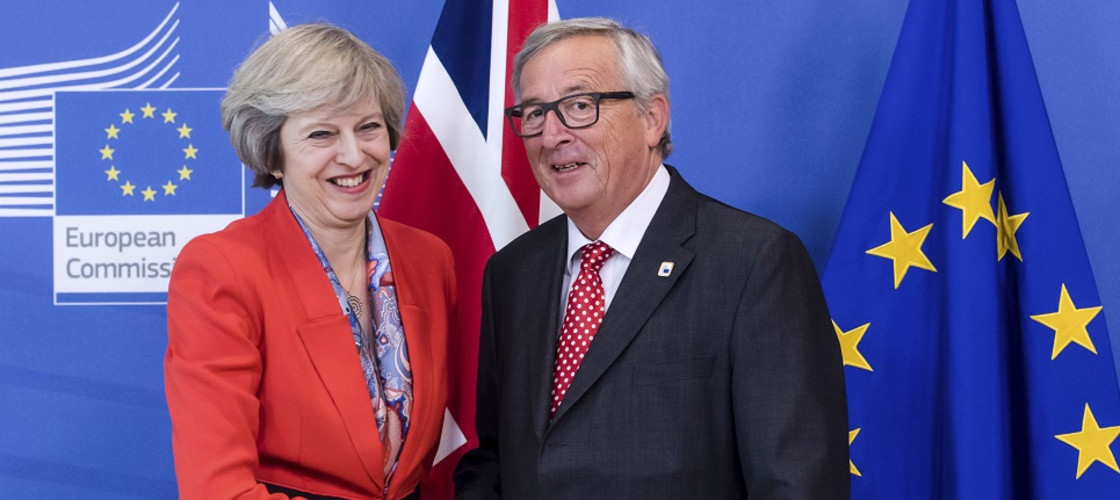
Image result for theresa may and jean claude juncker

The departure of Theresa May this month is without a doubt the most hilarious and shameful move in British politics to date. The consequences of her blatant power grab that magically changed her view on the UK’s relationship with the EU could not be any more fitting. Modern politics is the separation of a quest for individual power and status from a noble position of authority where one cares for one’s people and one’s country. Driving bitter but necessary negotiations into the ground only to leave it in the hands of even more incompetent people like Boris Johnson or Nigel Farage or others cannot be forgiven by shedding a tear as one resigns.

I once thought that I would have to give up one of my passports in order to claim British citizenship. Luckily, I don’t, and I say luckily because I know that many others will have to. Even with this privilege, I won’t apply for the British passport. Call me ungrateful, but no one is more ungrateful than the British public and government who has so little regard to immigrants who have worked, paid taxes and studied to help this country not fall into ruin. Why should people reject their heritage and their roots just to stay in a country that they’ve given everything to? In the wake of Brexit and June 23rd 2016 it feels more and more like defeat to attempt to claim British citizenship. To lie about my identity, and to take on a label of British in order to just resume my daily life – I’d be living an unforgivable lie to myself and to my heritage of which I am so proud and hold so dear to. It’s a dilemma to which the answer still is just as unclear to me as the Brexit deal itself.

So where does this leave me? And people like you, the reader, who perhaps also hails from a European background, not to mention those who have come from much further? Well, it leaves us behind. Neglected, confused, stuck in our uncanny valley. To bite the bullet and take the high road, abandon everything we’ve worked for, fought for, built and curated in England’s green and pleasant land might not make William Blake turn in his grave but it certainly makes me and many others turn in our sleep every night. Protest. Demand for public opinion. Shout as loud as we can. Boycott Brexit-supporting companies (yes, even spoons). Living in permanent anxiety of whether or not I can stay in my home country doesn’t suit me. The idea of “moving back to ___” doesn’t really make sense – I’ve always lived in London. London is my home. There is perhaps still a place for my parents to go back to, but not for me. And as The Clash plays on in the background in my room, I still don’t know if I should stay or if I should go. 

https://www.independent.co.uk/news/business/news/brexit-cost-how-much-uk-economy-money-spent-a8854726.html

Anderson, Benedict R. O’G. (1991). Imagined communities: reflections on the origin and spread of nationalism. (Revised and extended. ed.). London: Verso.